Types of Interior Lighting and How to Distribute Them
Learn about the main types of interior lighting and how to distribute them in living rooms, bedrooms, kitchens, bathrooms, entrances, and other spaces to create a comfortable, elegant, and functional home.
Types of Interior Lighting and How to Distribute Them
Lighting is one of the most important elements in interior design. It does not only brighten a space, but also affects the mood, comfort, and overall appearance of the room. A well-planned lighting design can make any interior feel more elegant, spacious, and luxurious.
Choosing the right type of lighting and distributing it correctly helps highlight furniture, wall details, materials, colors, and decorative elements. That is why lighting should be planned from the early stages of the interior design process.
Why Lighting Is Important in Interior Design
Good lighting helps each room serve its function properly. The lighting needed in a living room is different from the lighting needed in a kitchen, bedroom, bathroom, or home office.
Lighting can also make a space feel warmer, larger, and more balanced. When used correctly, it adds depth and enhances the beauty of the interior design.
Main Types of Interior Lighting
1. General Lighting
General lighting is the main source of light in a room. It is used to illuminate the whole space evenly.
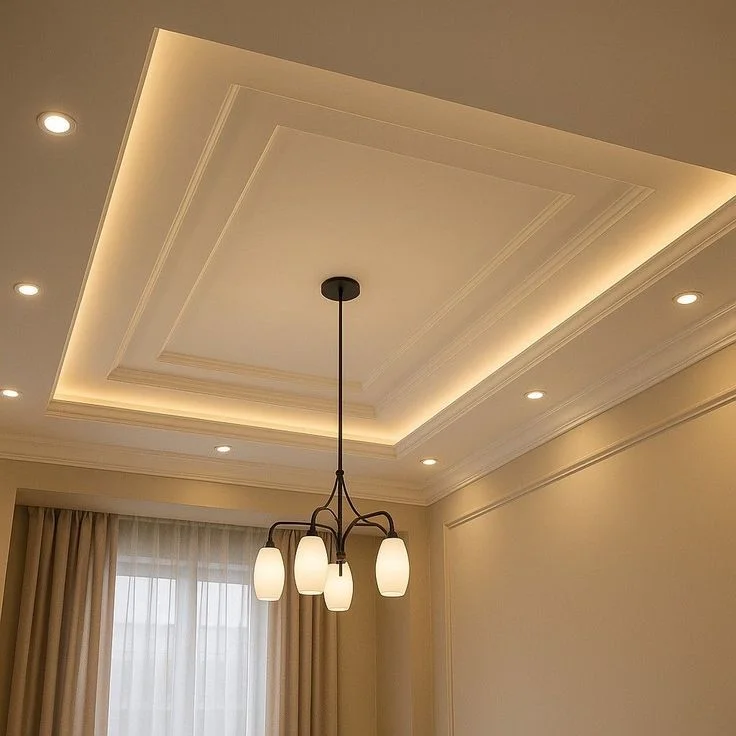
This type of lighting can be achieved through ceiling lights, spotlights, chandeliers, or hidden ceiling lighting. It is commonly used in living rooms, bedrooms, kitchens, bathrooms, corridors, and entrances.
The goal of general lighting is to provide enough brightness without creating dark corners or harsh shadows.
2. Functional Lighting
Task lighting is used for specific activities such as reading, cooking, working, applying makeup, or using a mirror.
Examples of task lighting include bedside lamps, desk lamps, under-cabinet kitchen lights, and mirror lighting in bathrooms and vanity areas.
This type of lighting should be clear and focused on the area where the activity takes place.
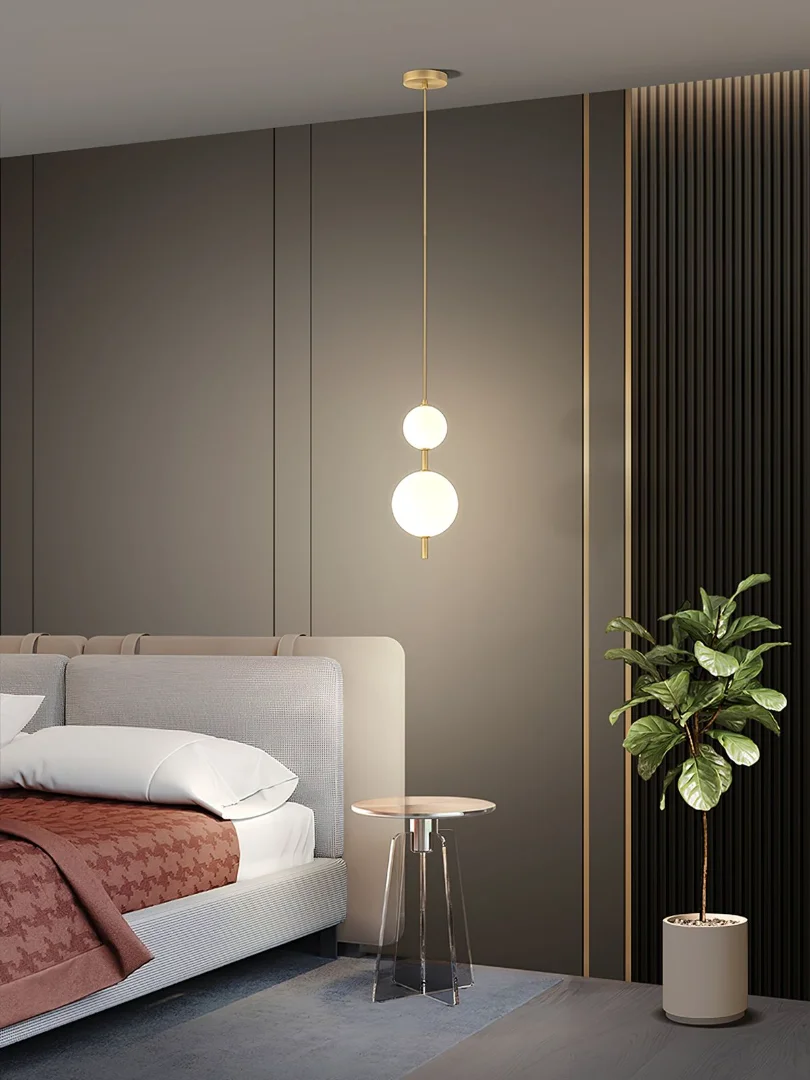
3. Decorative Lighting
Decorative lighting is used to add beauty and character to the space. It is not always the main source of light, but it plays an important role in completing the interior design.
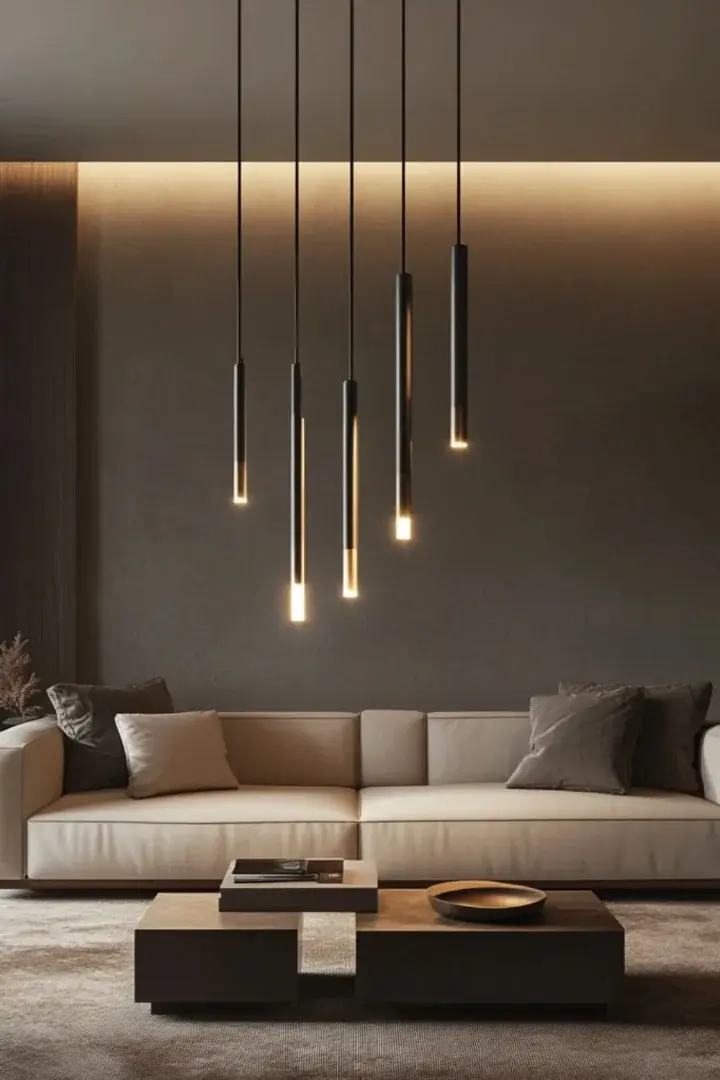
Examples include chandeliers, wall lights, pendant lights above dining tables, and decorative lamps placed near consoles, mirrors, or seating areas.
Decorative lighting gives the room a stylish and luxurious touch.
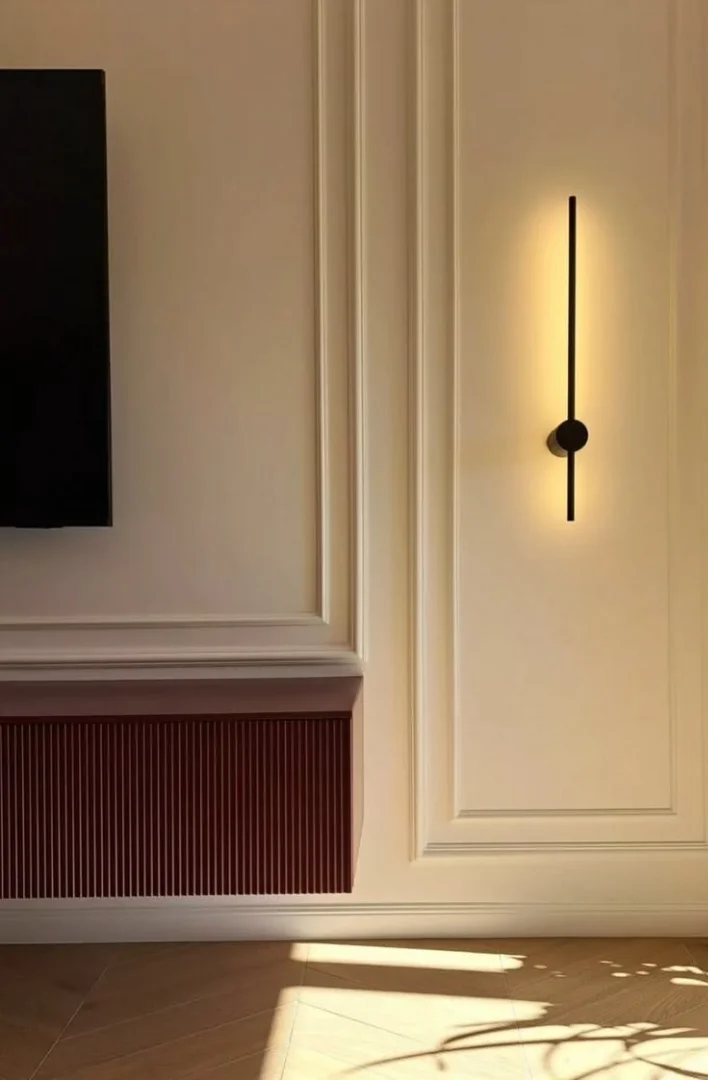
4. Accent Lighting
Accent lighting is used to highlight a specific feature in the room, such as an artwork, a textured wall, a TV wall, a bookshelf, or special materials like marble or wood.
This type of lighting adds visual depth and makes certain design details stand out more clearly.
Accent lighting is often used in modern interiors to create a more elegant and professional look.
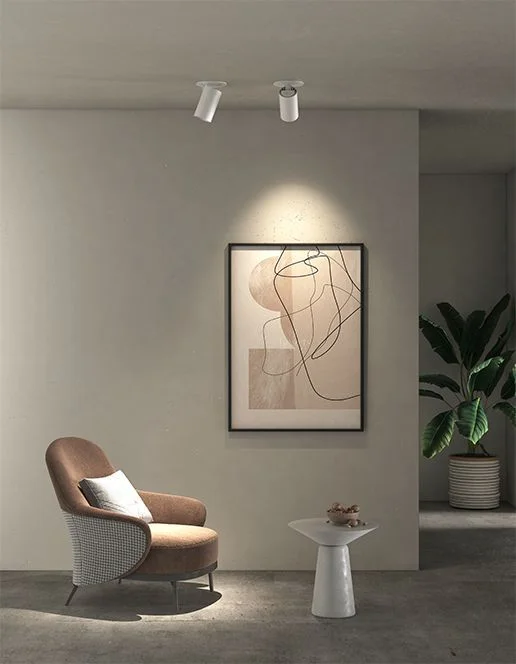
5. Hidden Lighting
Hidden lighting is one of the most popular lighting types in modern interior design. It creates a soft and luxurious atmosphere without showing the light source directly.
It is often used in gypsum ceilings, behind mirrors, behind TV walls, behind bed headboards, under stairs, or inside cabinets.
Hidden lighting is perfect for spaces that need a calm, warm, and relaxing feeling.
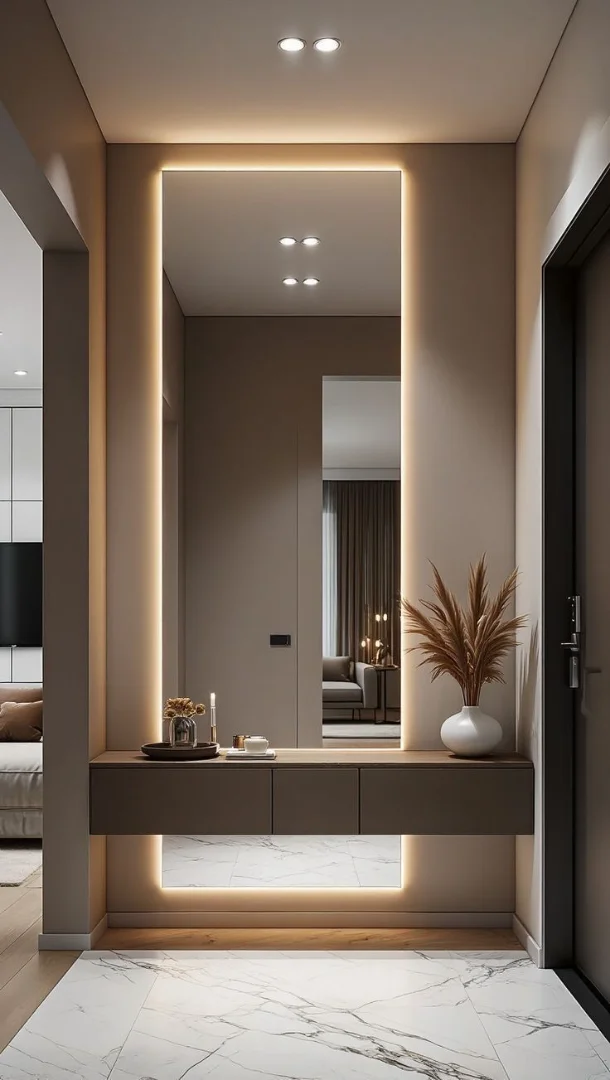
How to Distribute Lighting in Different Interior Spaces
Living Room Lighting
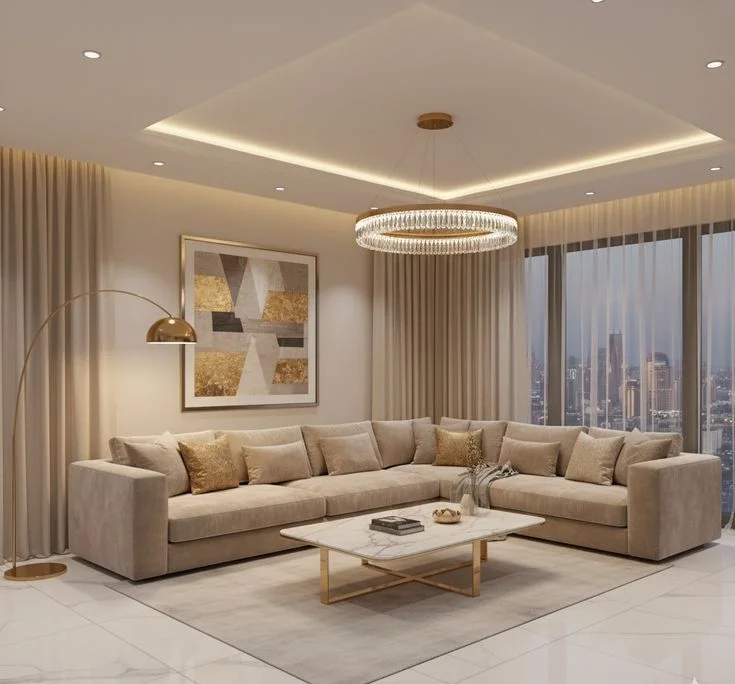
The living room needs a combination of different lighting layers. General lighting can be used through ceiling spotlights or hidden lighting, while decorative lamps and wall lights can create a softer atmosphere.
Accent lighting can also be used to highlight the TV wall, artwork, or decorative shelves.
It is always better to use dimmable lighting in the living room, so the brightness can be adjusted according to the time of day and the activity.
Bedroom Lighting
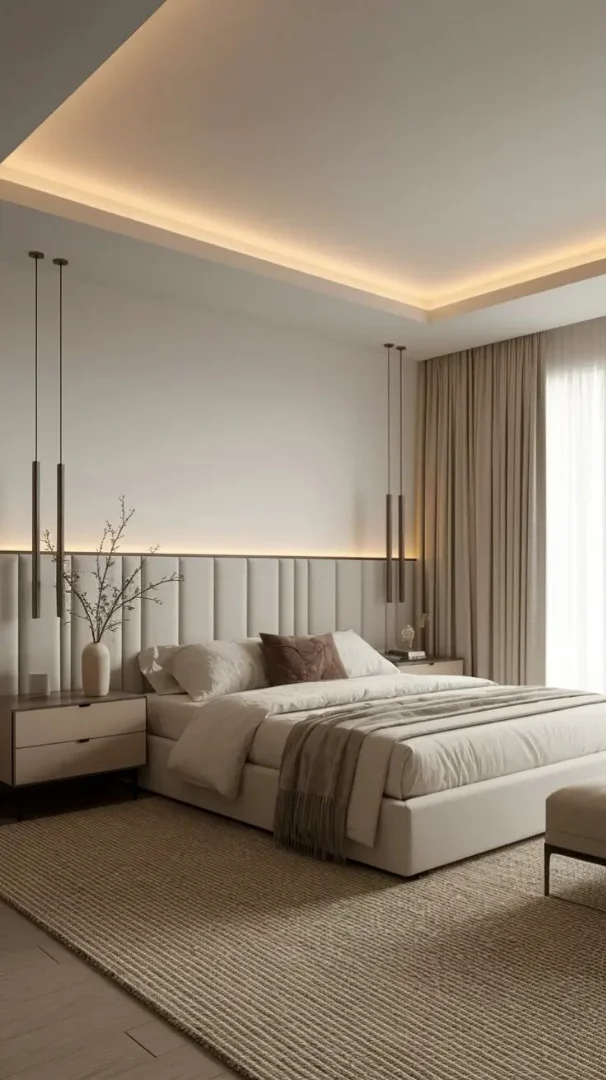
Bedroom lighting should be calm, warm, and comfortable. Hidden lighting behind the bed or in the ceiling can create a relaxing mood.
Bedside lamps or wall lights are also useful for reading. It is better to avoid strong direct lighting above the bed, as it can feel uncomfortable.
Warm lighting is usually the best choice for bedrooms because it creates a peaceful and cozy atmosphere.
Kitchen Lighting
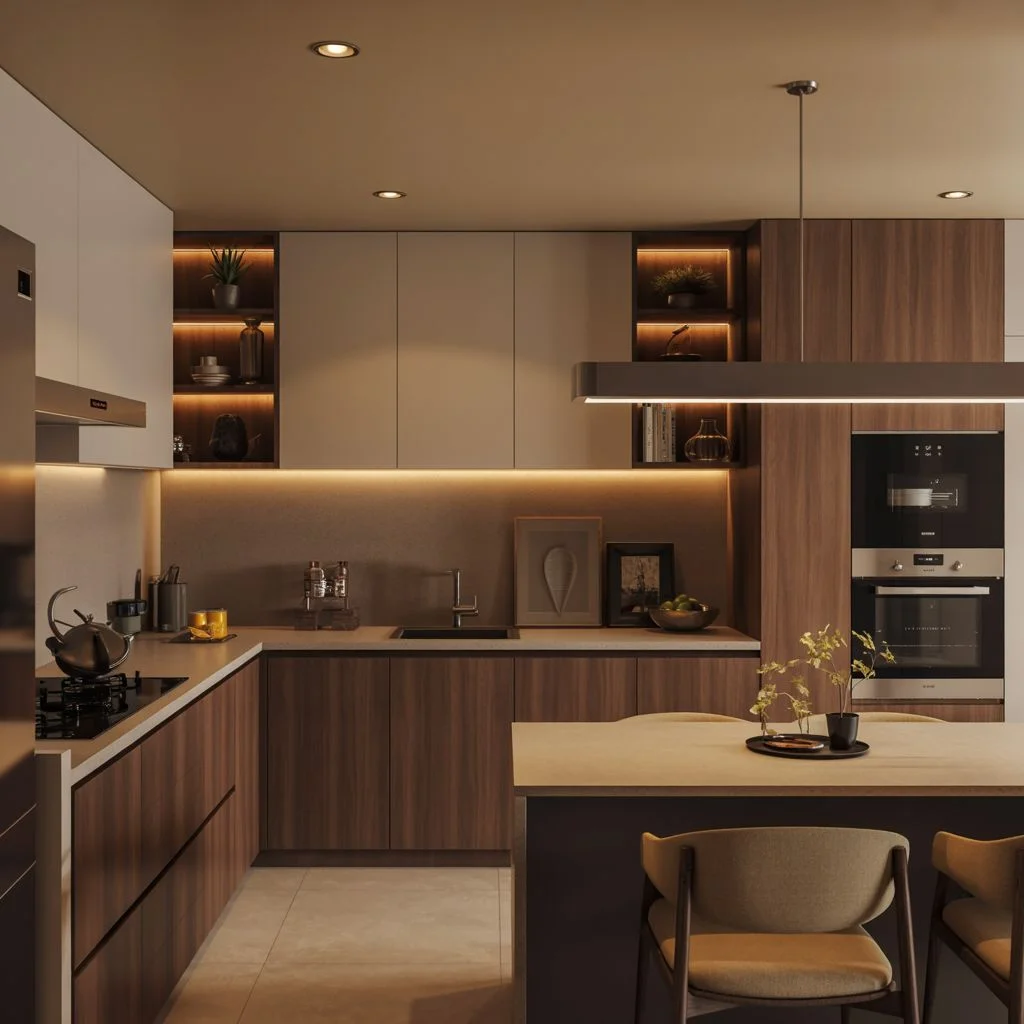
The kitchen needs clear and practical lighting. Ceiling lights should be distributed evenly to brighten the whole space.
Task lighting is very important in the kitchen, especially under the upper cabinets to illuminate the countertop while cooking or preparing food.
If the kitchen has an island or breakfast bar, pendant lights can be used above it to add both function and style.
Dining Room Lighting
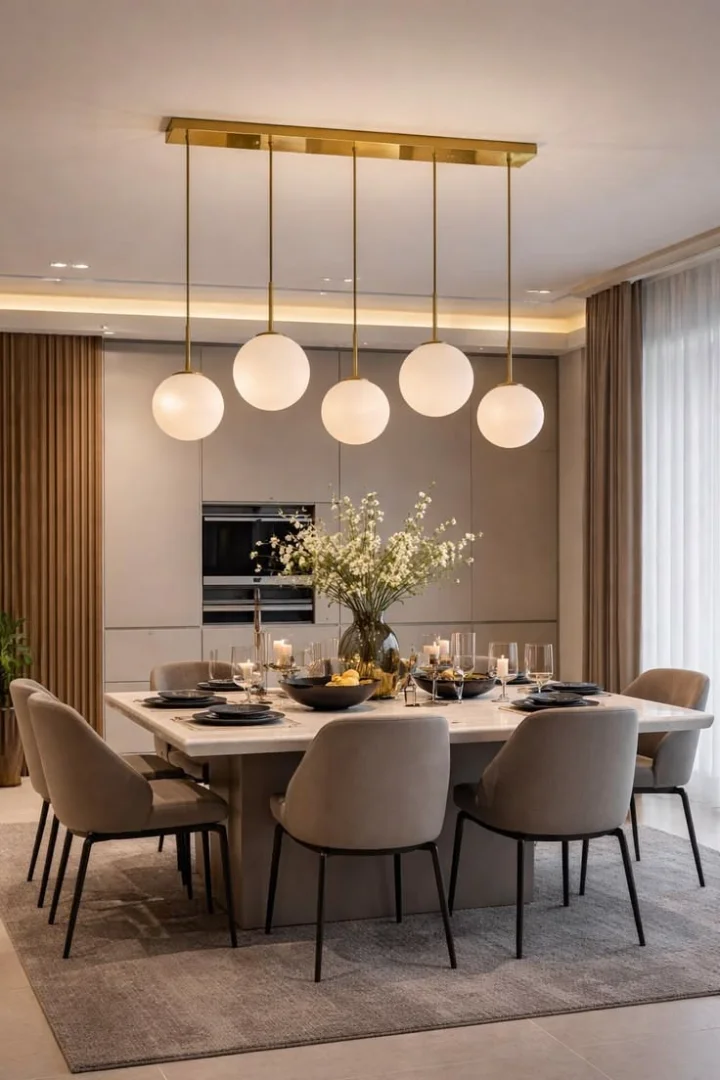
In the dining room, the main lighting feature is usually the pendant light or chandelier above the dining table.
It should be centered above the table and placed at a suitable height, so it provides enough light without disturbing the eyes.
Hidden lighting or wall lights can also be added to create a more elegant and luxurious dining atmosphere.
Bathroom and Vanity Lighting
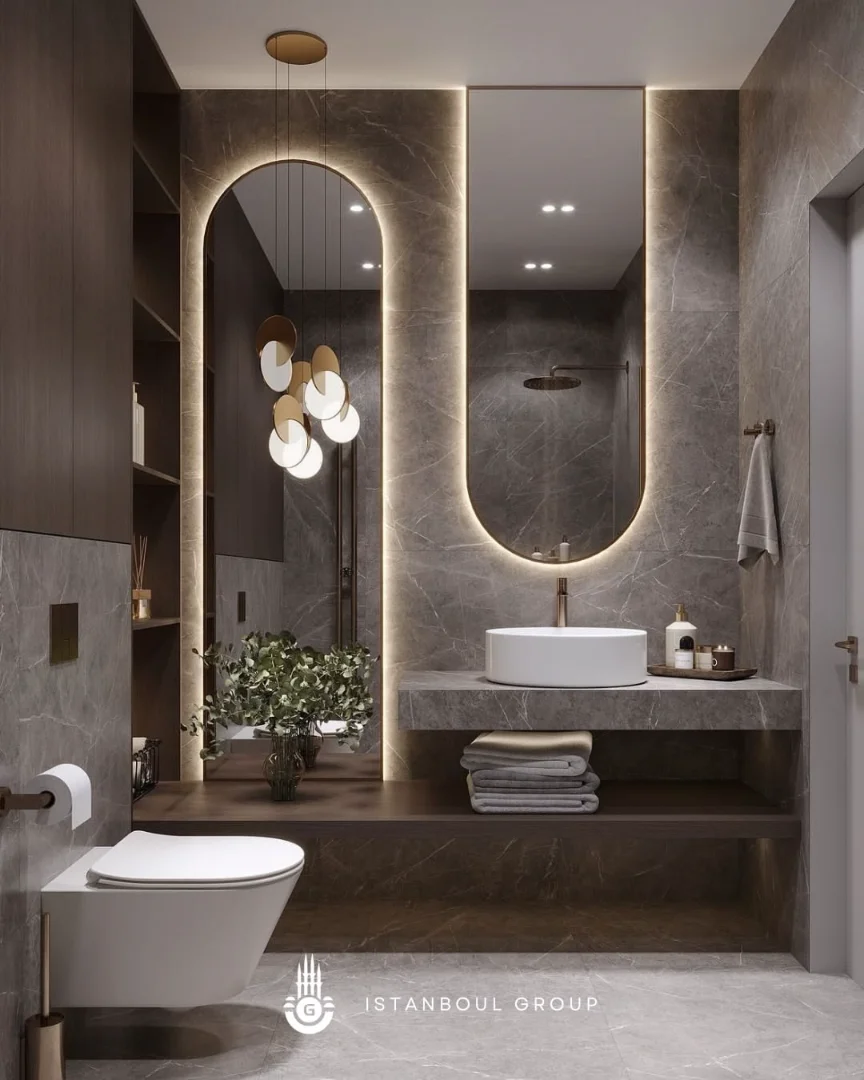
Bathrooms need clear lighting, especially around the mirror. It is better to place lighting on both sides of the mirror or behind it to reduce shadows on the face.
Hidden lighting under the vanity unit or behind the mirror can also give the bathroom a modern, hotel-like look.
For bathrooms, the lighting should be practical, comfortable, and suitable for daily use.
Entrance and Corridor Lighting
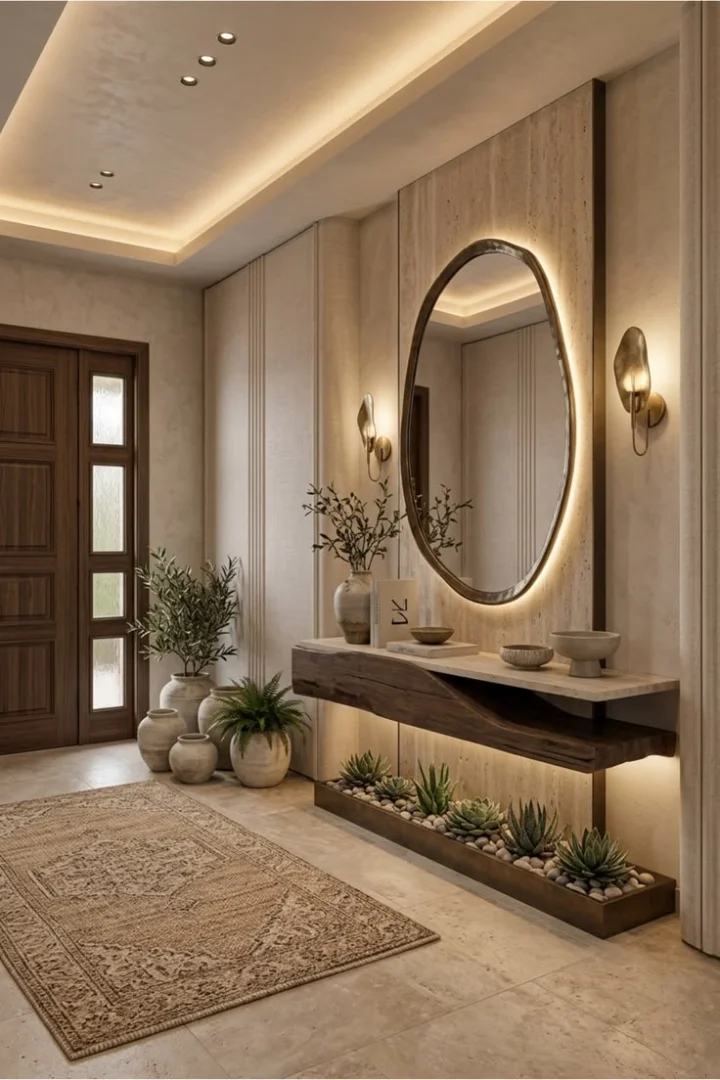
Entrances and corridors are important because they create the first impression of the home.
Ceiling lights, wall lights, or focused spotlights can be used to make the entrance look more welcoming and elegant.
In entrance areas, lighting can be directed toward a console table, mirror, artwork, or feature wall to create a stylish focal point.
Important Tips for Choosing Interior Lighting
When choosing lighting, do not depend on one light source only. It is better to use different lighting layers, such as general lighting, task lighting, accent lighting, and hidden lighting.
The color temperature is also important. Warm lighting is suitable for bedrooms, living rooms, and majlis areas, while neutral or white lighting is more suitable for kitchens, offices, and bathrooms.
It is also important to consider the size of the room, ceiling height, furniture layout, and the areas that need extra focus.
Conclusion
Lighting is an essential part of successful interior design. It highlights materials, improves functionality, and gives every space its own mood and personality.
By choosing the right types of lighting and distributing them correctly, you can create an interior that is comfortable, practical, elegant, and visually balanced.