The Difference Between Marble and Porcelain in Interior Design: Which Is Better for Your Home?
Discover the key differences between marble and porcelain in interior design, including appearance, durability, water resistance, maintenance, and cost, to choose the best material for your home.
The Difference Between Marble and Porcelain in Interior Design: Which Is Better for Your Home?
When choosing finishing materials for interior design, one common question often comes up: what is the difference between marble and porcelain? And which one is better for floors, walls, kitchens, or bathrooms?
Both materials can give a space an elegant and luxurious look, but each one has different characteristics in terms of appearance, durability, cost, and usage.
What Is Marble?
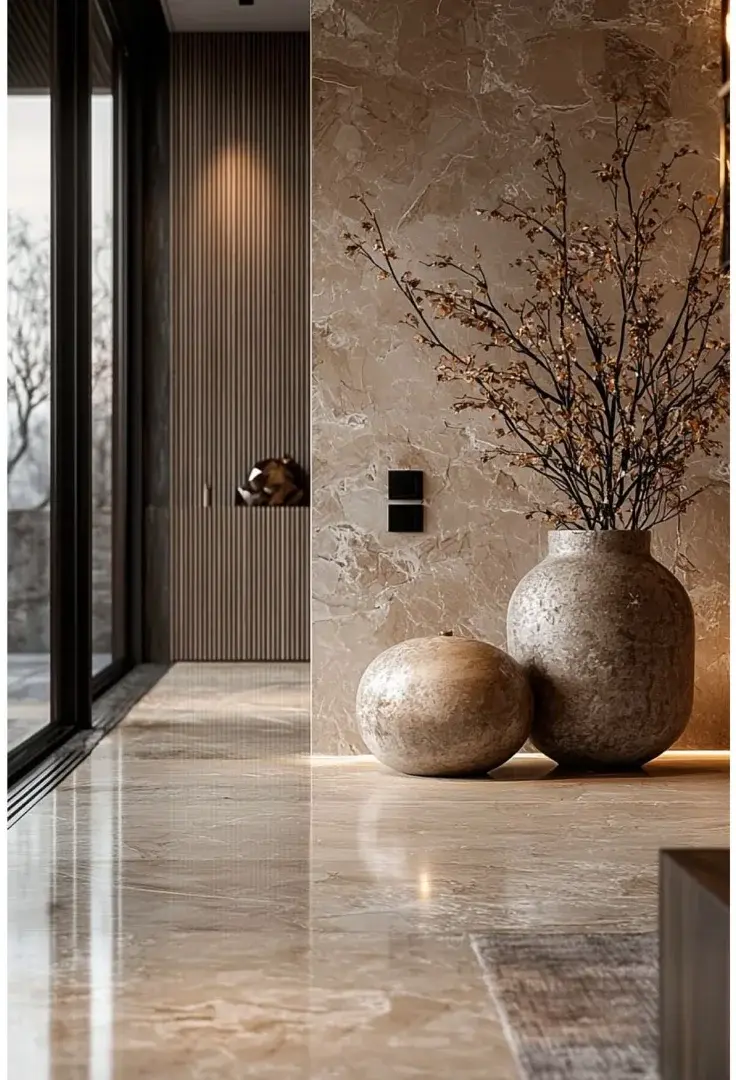
Marble is a natural stone extracted from mountains. It is known for its natural veins, unique colors, and luxurious appearance. No two marble slabs are exactly the same, which makes it a distinctive and high-end choice in interior design.
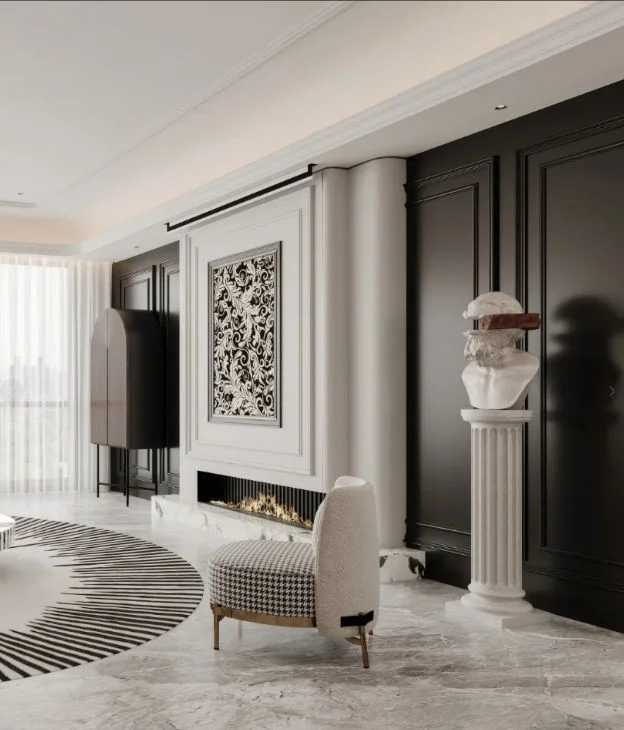
Marble is commonly used for flooring, walls, washbasins, tabletops, entrances, and luxury majlis areas, especially in classic, neoclassical, and modern luxury interiors.
What Is Porcelain?
Porcelain is a manufactured material made from clay and minerals, then fired at very high temperatures. This process gives it strength, durability, and low water absorption.
Today, porcelain has become one of the most widely used finishing materials because it comes in many designs that can imitate marble, stone, wood, and concrete.
Porcelain can be used for floors, walls, kitchens, bathrooms, interior cladding, and even commercial spaces because it is practical and easy to clean.
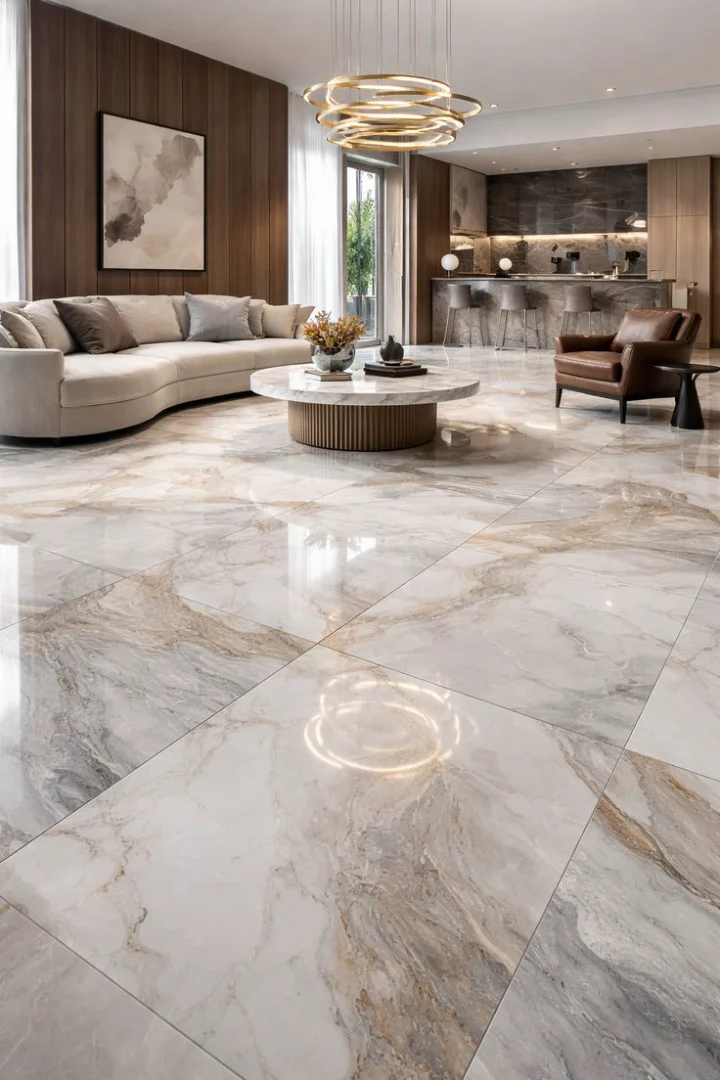
The Difference Between Marble and Porcelain
1. Appearance and Luxury
Marble gives a natural and luxurious feeling that is difficult to replicate, because its veins and colors are authentic and unique. This is why it is often used in spaces that need a high-end touch, such as entrances, majlis areas, reception halls, and luxury washbasins.
Porcelain, on the other hand, is available in many designs, including porcelain that looks very similar to marble. However, it may still feel less natural than real marble. Even so, it is an excellent option for those who want the look of marble with less cost and easier maintenance.
2. Durability and Daily Use
Porcelain is usually more practical for everyday use because it is resistant to scratches, moisture, and stains, and it is easy to clean. This makes it suitable for homes with heavy movement, such as kitchens, bathrooms, hallways, and living rooms.
Marble is also durable, but it requires more care because it is a natural stone. It can be affected by stains or acidic materials such as lemon, vinegar, and strong cleaning products.
3. Water Absorption and Stains
Porcelain has a very low water absorption rate, which makes it a great choice for bathrooms, kitchens, and areas exposed to moisture.
Marble is more sensitive to stains and water if it is not properly sealed or treated. That is why it needs proper protection and suitable cleaning methods to maintain its shine and quality.
4. Maintenance and Cleaning
Porcelain is easier to clean and can be used for long periods without major maintenance. Marble, however, needs special care and may require polishing or resealing over time, especially when used for floors or frequently used surfaces.
5. Cost and Installation
Marble is often more expensive than porcelain, not only because of the material itself, but also because of the cost of installation, cutting, transportation, and maintenance.
Porcelain is usually considered a more affordable and practical option, especially when choosing a high-quality type with a design that looks close to marble.