Mixing Materials in Interior Design: Secrets to a Balanced Look
Mixing materials in interior design adds depth, warmth, and elegance to any space. The key is to balance colors, textures, proportions, and lighting to create a harmonious and professional look.
Mixing Materials in Interior Design: Secrets to a Balanced Look
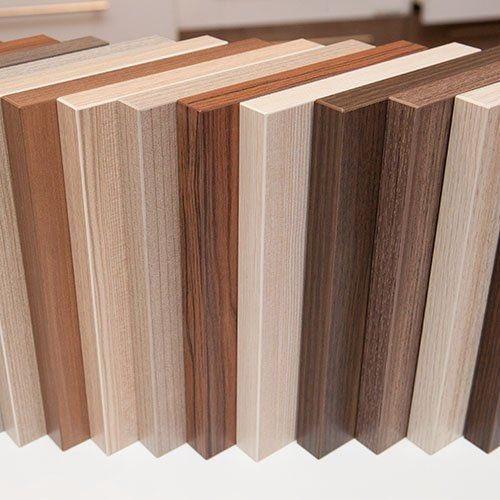
Mixing materials is one of the most important elements of successful interior design. It gives a space more depth, character, and visual richness. Wood adds warmth, marble brings elegance, metals create a modern touch, while fabrics soften the space and make it feel more comfortable.
However, using more than one material needs careful balance. When materials are not coordinated properly, the room can feel crowded or disconnected.
Start with a Main Material
The first step is to choose one main material for the space. This is usually the material that appears the most, such as flooring, wall cladding, cabinets, or large furniture pieces.
For example, wood can be used as the main material, then marble can be added in a coffee table or feature wall, while metal details appear in lighting, handles, or accessories.
Balance the Materials
It is better not to use too many materials in one room. A good approach is to choose one main material, one secondary material, and one accent material.
This keeps the design rich and interesting without making it look overwhelming. The materials should also be distributed across the space in a balanced way, instead of being concentrated in one area only.
Combining Wood and Marble
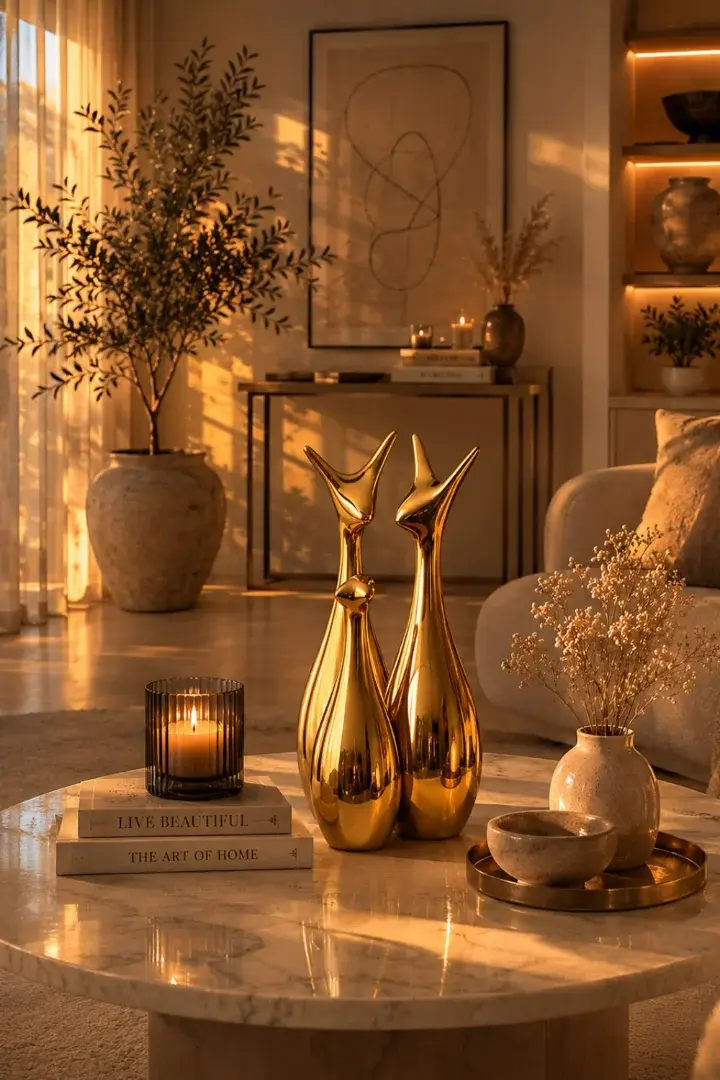
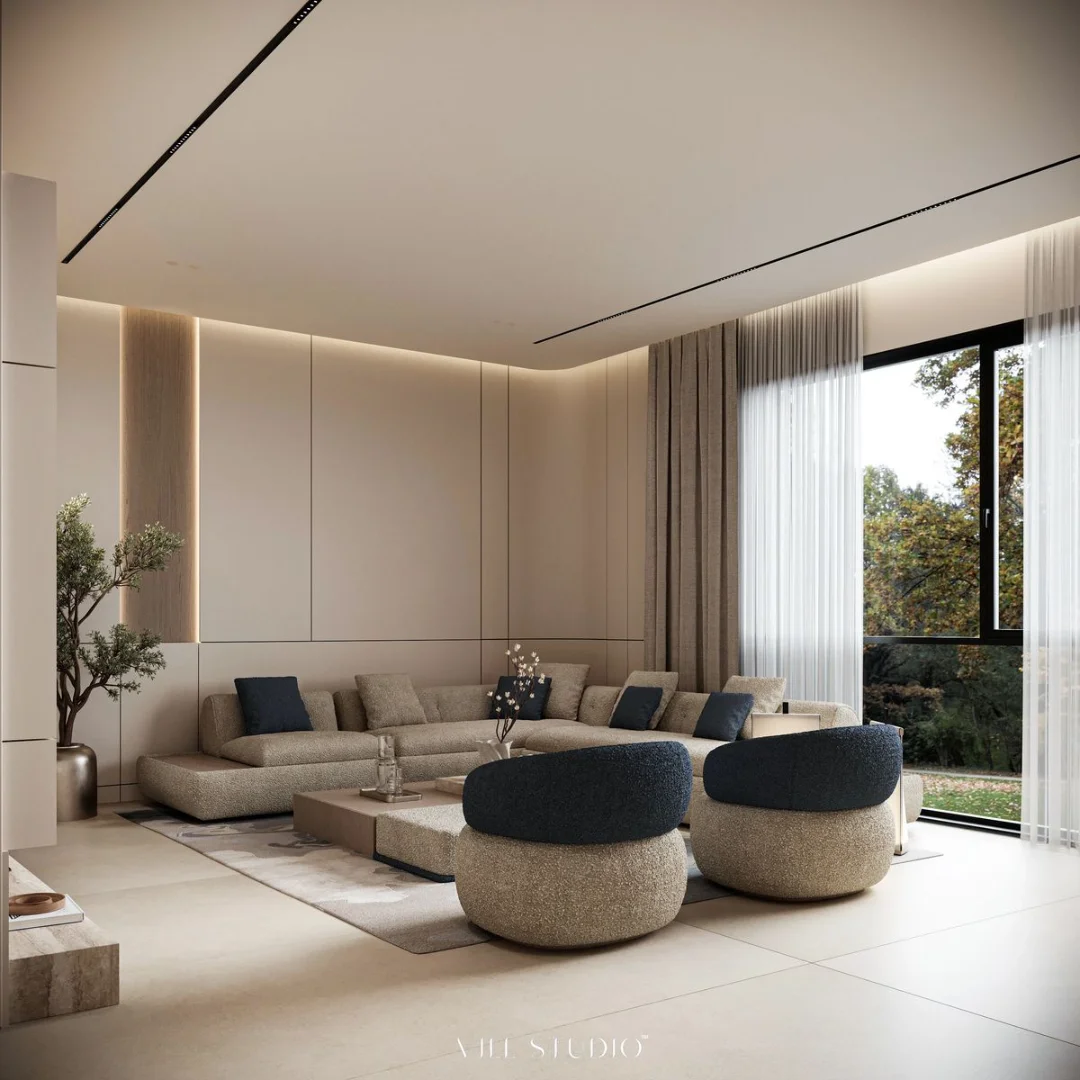
Wood and marble are one of the most elegant combinations in interior design. Marble adds a luxurious and refined feeling, while wood brings warmth and comfort.
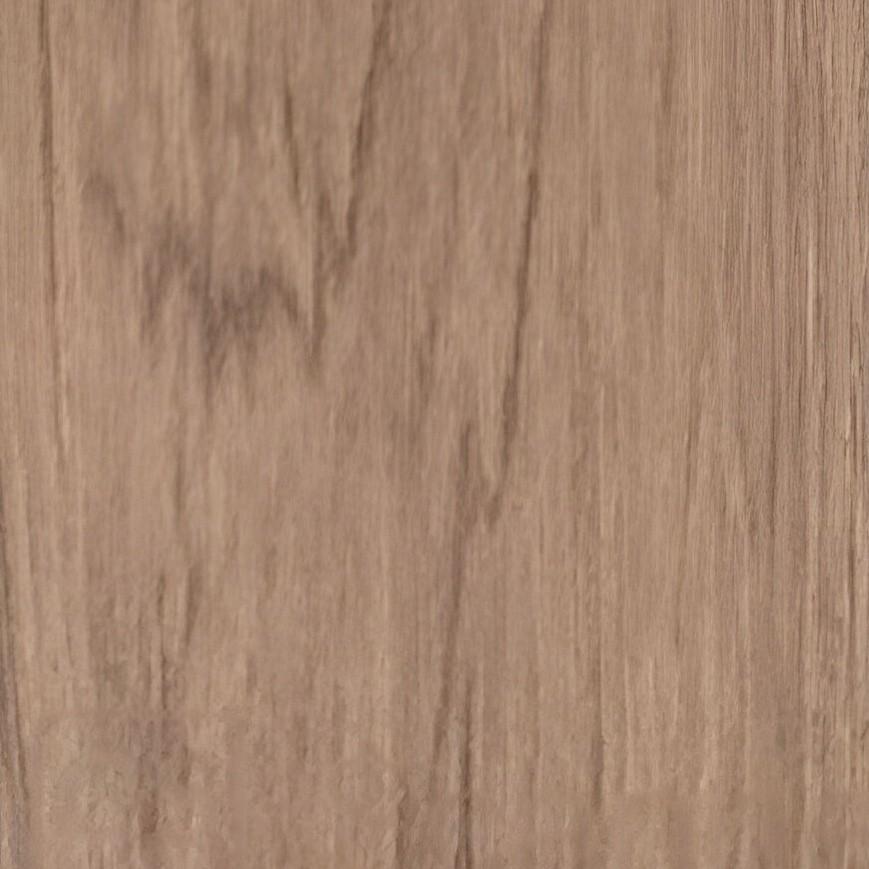
Marble can be used on a feature wall, tabletop, or countertop, while wood can appear in flooring, TV units, shelves, doors, or cabinets. If the marble is light, it works beautifully with natural or walnut wood tones. If the marble is dark, it is better to pair it with lighter wood to avoid making the space feel too heavy.
Using Metal Details
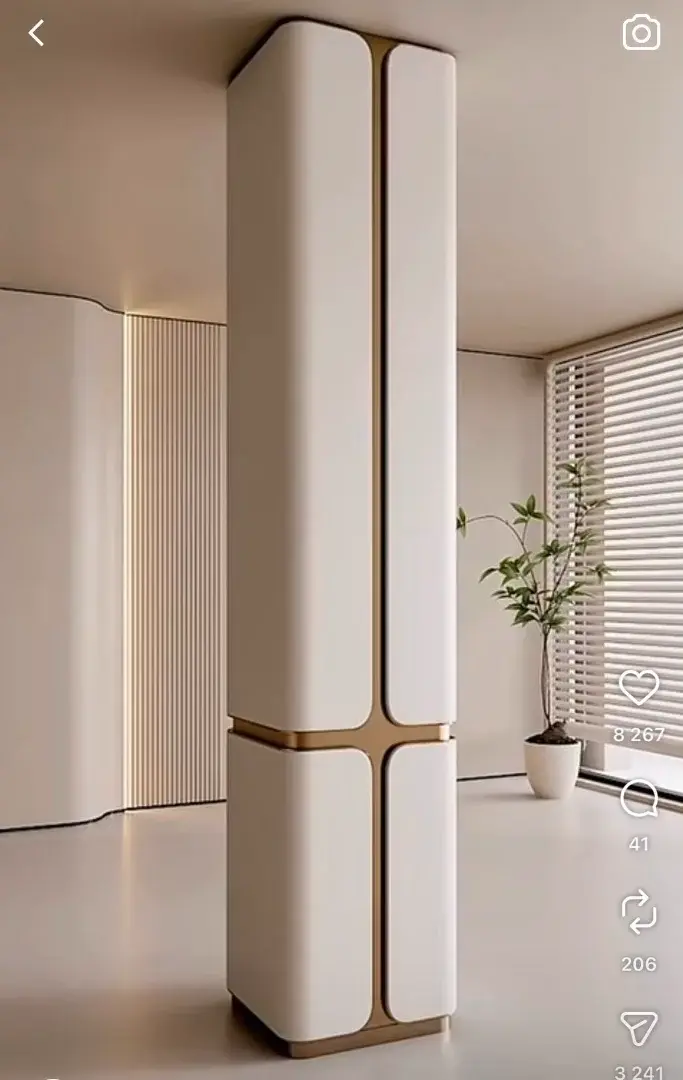
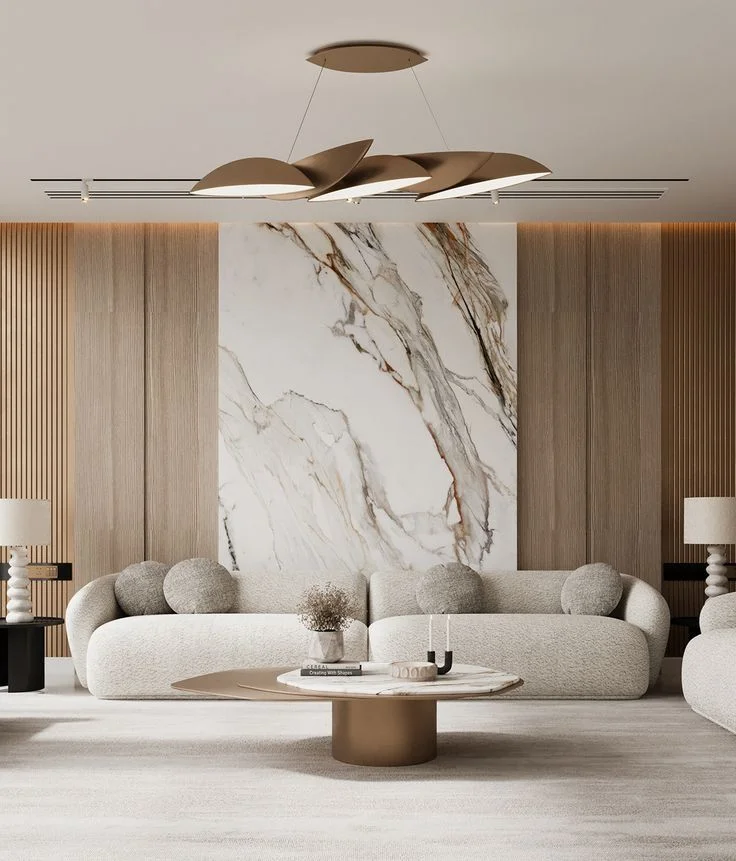
Metal adds a luxurious and modern touch when used carefully. It can appear in lighting fixtures, cabinet handles, table legs, mirror frames, or decorative details.
Gold works well in luxurious and neoclassical interiors, matte black suits modern and industrial styles, while bronze adds warmth and elegance.
The most important thing is not to overuse metal or mix too many metal finishes randomly in the same space.
Softening the Space with Fabrics
When a space includes hard materials such as marble, glass, or metal, fabrics become essential. They help soften the look and make the room feel more welcoming.
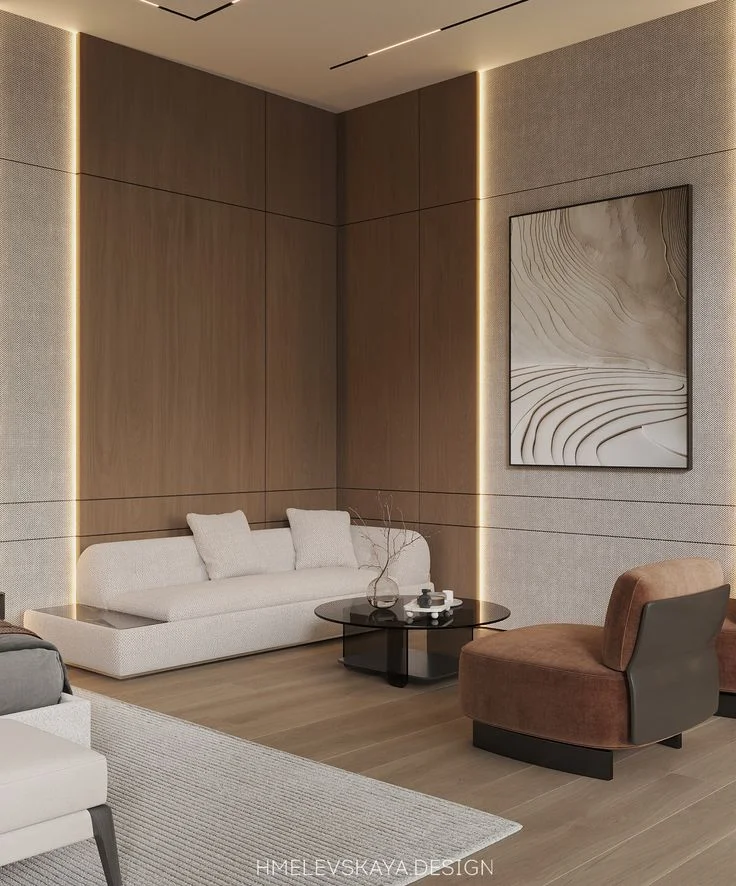
Fabrics can be added through sofas, curtains, rugs, cushions, armchairs, or dining chairs. Materials such as linen, velvet, or boucle bring warmth, texture, and comfort to the overall design.
Pay Attention to Colors and Textures
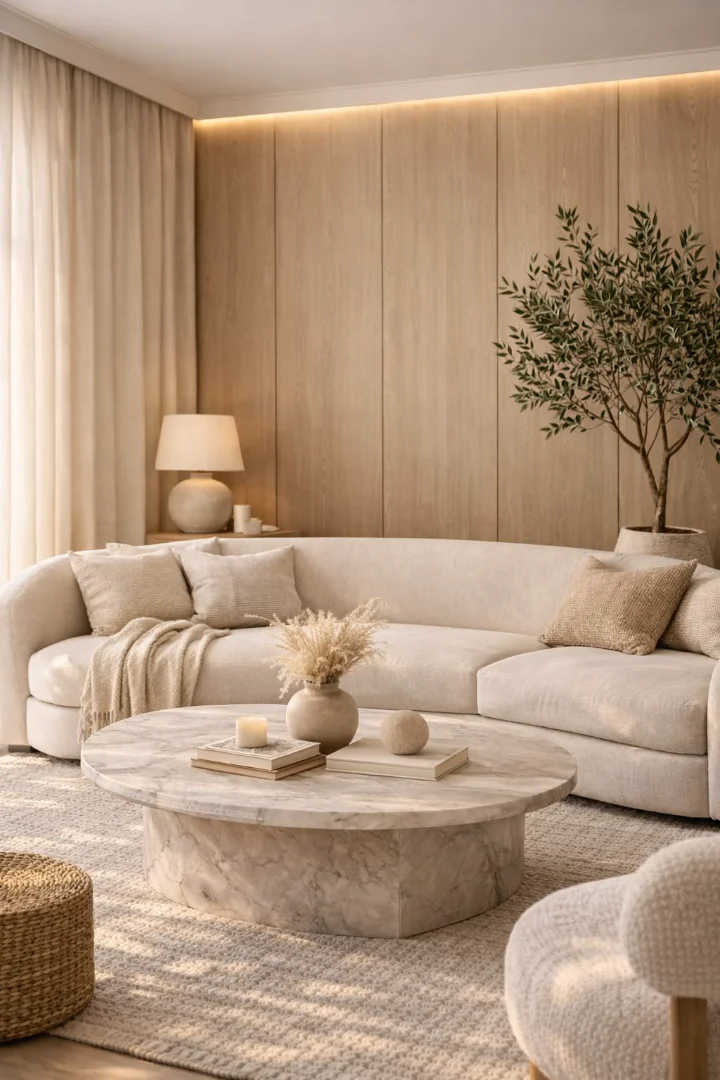
Successful material coordination is not only about the type of material, but also about color and texture. It is important to choose a clear color palette before mixing different finishes.
For warm interiors, you can combine natural wood, beige marble, gold metal, and cream or brown fabrics. For a modern look, you can use white or grey marble, black metal, glass, and soft grey or neutral fabrics.
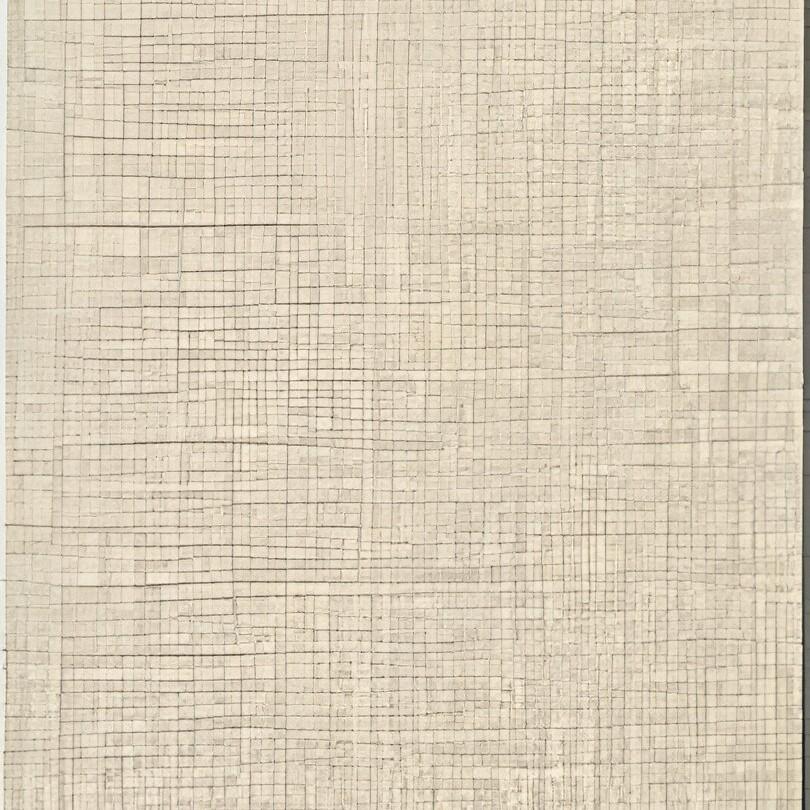
Texture also plays an important role. Mixing smooth, glossy, natural, and textured surfaces creates visual depth without needing too many colors.
Lighting Highlights the Materials
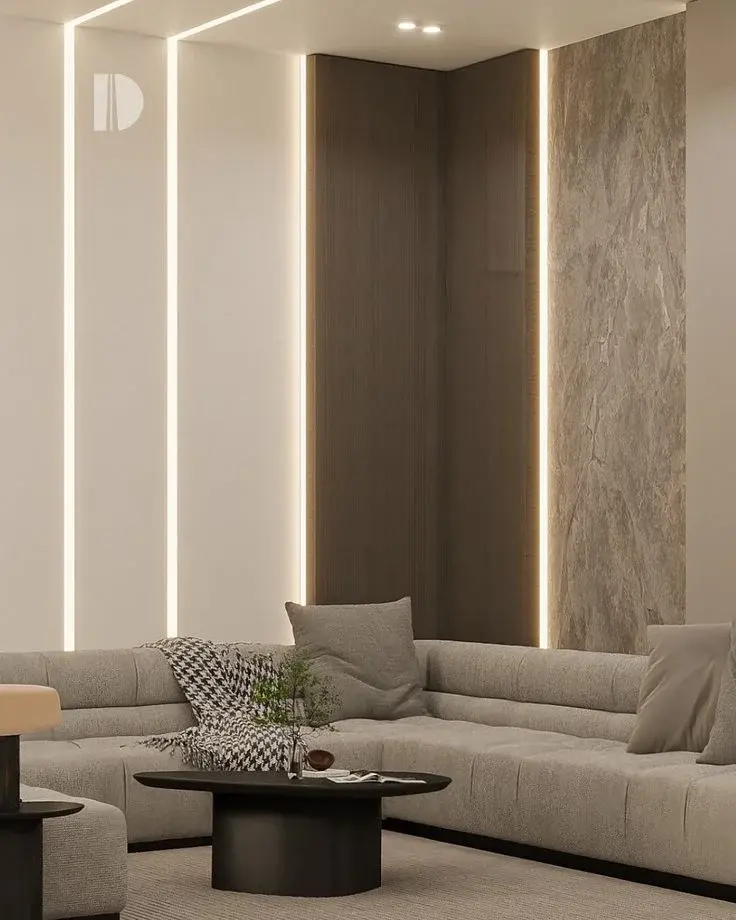
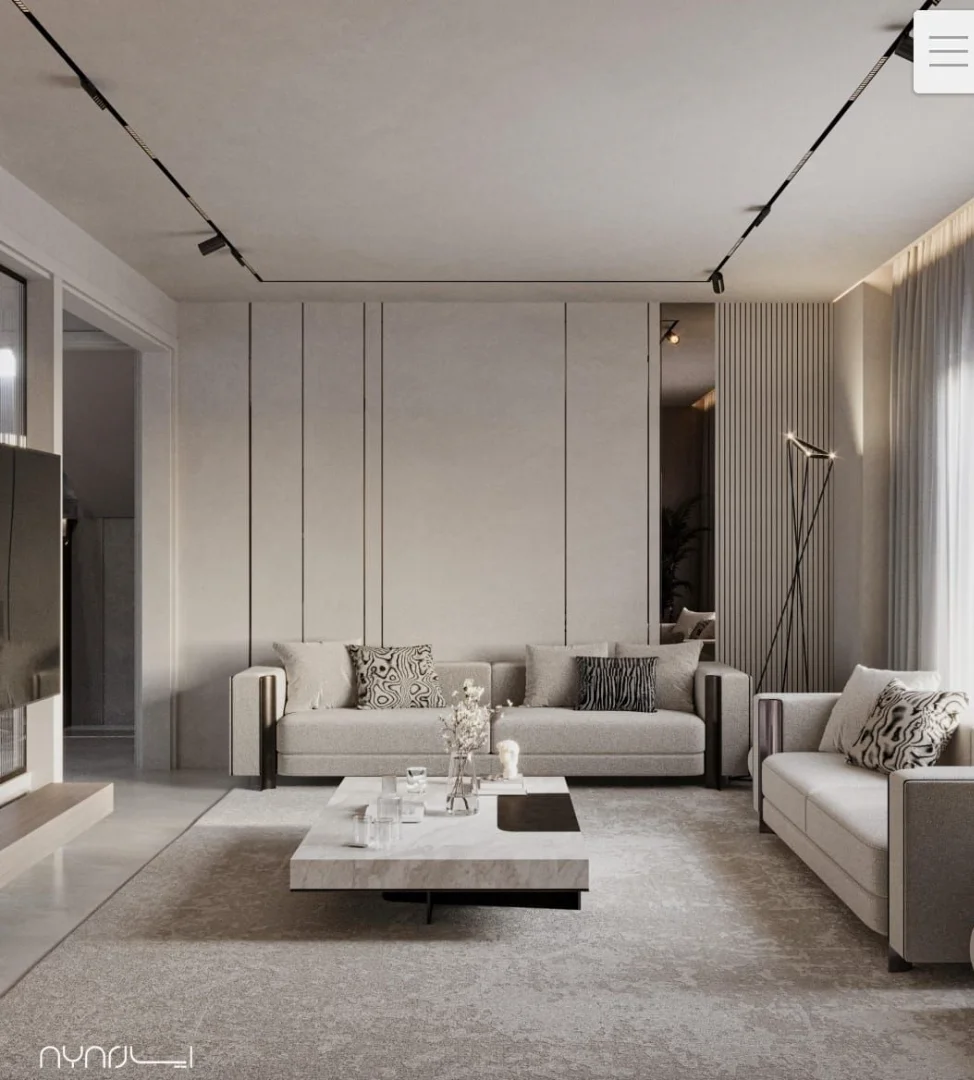
Lighting can completely change the way materials appear. Wood looks warmer under soft lighting, marble needs good lighting to show its natural veins, and metal or glass reflects light beautifully when placed correctly.
Hidden lighting, wall lights, spotlights, and table lamps can all be used to highlight the most beautiful materials in the room.
Mistakes to Avoid
One of the most common mistakes is using too many materials in a small space. This can make the room look busy and uncomfortable. Another mistake is choosing only shiny materials, which can make the space feel cold or visually tiring.
It is also important to repeat one material in more than one place. For example, if wood is used in the TV unit, it can also appear in a side table or mirror frame. This helps connect the design and makes the space feel more cohesive.
Conclusion
Mixing materials in interior design requires balance between elegance and simplicity. Choose one main material, add supporting materials in thoughtful proportions, and pay attention to color, texture, and lighting.
When wood, marble, metal, glass, and fabrics are combined in the right way, the result is a stylish, balanced, and comfortable interior.