How to Choose a Focal Point in Every Room
Learn how to choose the perfect focal point for every room, from statement walls and furniture pieces to lighting, mirrors, artwork, and decorative details that create balance and visual interest.
How to Choose a Focal Point in Every Room
In interior design, a beautiful room is not only about choosing the right colors, furniture, and materials. Every space need one main visual element that attracts attention and gives the room a clear identity. This element is called a focal point.
A focal point is the first thing the eye notices when entering a room. It can be a statement wall, a special furniture piece, a large artwork, a mirror, a chandelier, a fireplace, a beautiful bed headboard, or even a large window with a nice view.
Choosing a focal point does not mean selecting the biggest or most expensive item in the room. The most important thing is to choose an element that suits the space, matches the overall style, and adds beauty without making the room feel crowded.
What Is a Focal Point in Interior Design?
A focal point is the main feature that visually anchors the room. It helps organize the design because the rest of the furniture, colors, lighting, and accessories are arranged around it.
Without a clear focal point, the room can feel incomplete or visually confusing. When there is one strong element, the space feels more balanced, intentional, and professionally designed.
How to Choose the Right Focal Point
Before choosing a focal point, ask yourself: what is the most beautiful or important feature in this room? Is it a wall, a piece of furniture, a lighting fixture, a material, or a view?
Choose only one main focal point in each room. Having too many strong elements can make the space feel busy and uncomfortable. The goal is to create balance between beauty, function, and comfort.
Focal Point in the Living Room
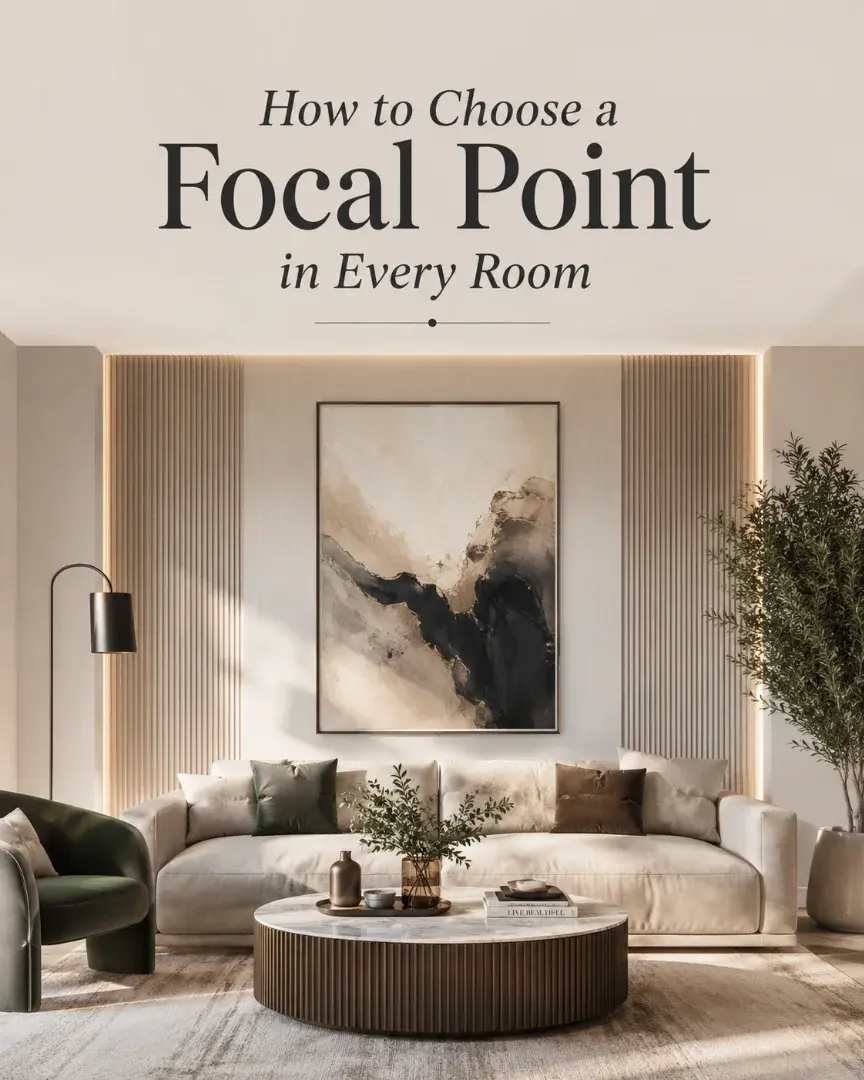
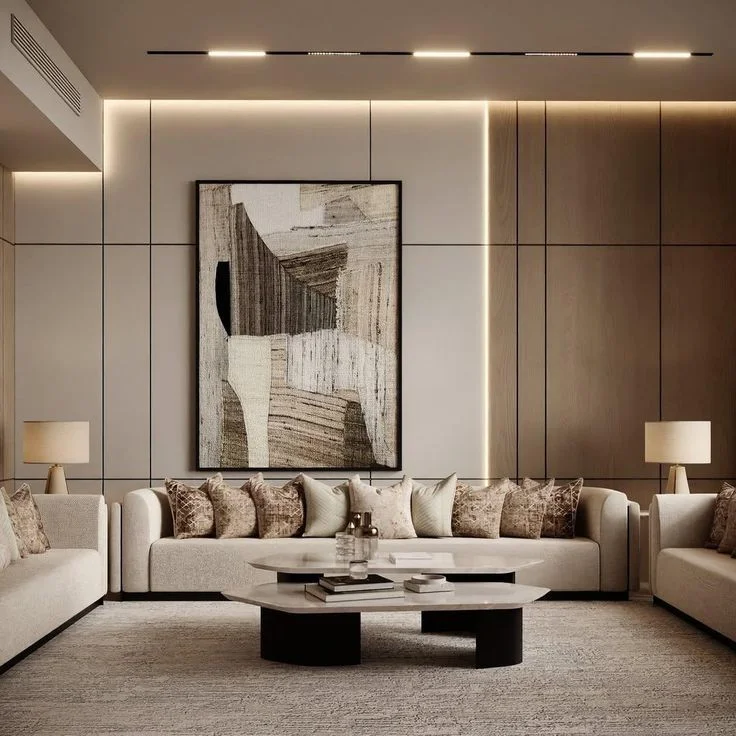
In the living room, the focal point can be the TV wall, the main sofa, a large artwork, a fireplace, or a unique coffee table.
If the TV wall has a special design, you can highlight it with materials such as wood, marble, stone, wall panels, or hidden lighting. If the sofa is the main feature, choose a beautiful color, elegant fabric, or stylish shape, then support it with cushions, a rug, and side tables.
The key is to avoid competition between the elements. If the TV wall is bold, keep the furniture simpler. If the sofa is the statement piece, keep the wall design calmer.
Focal Point in the Bedroom
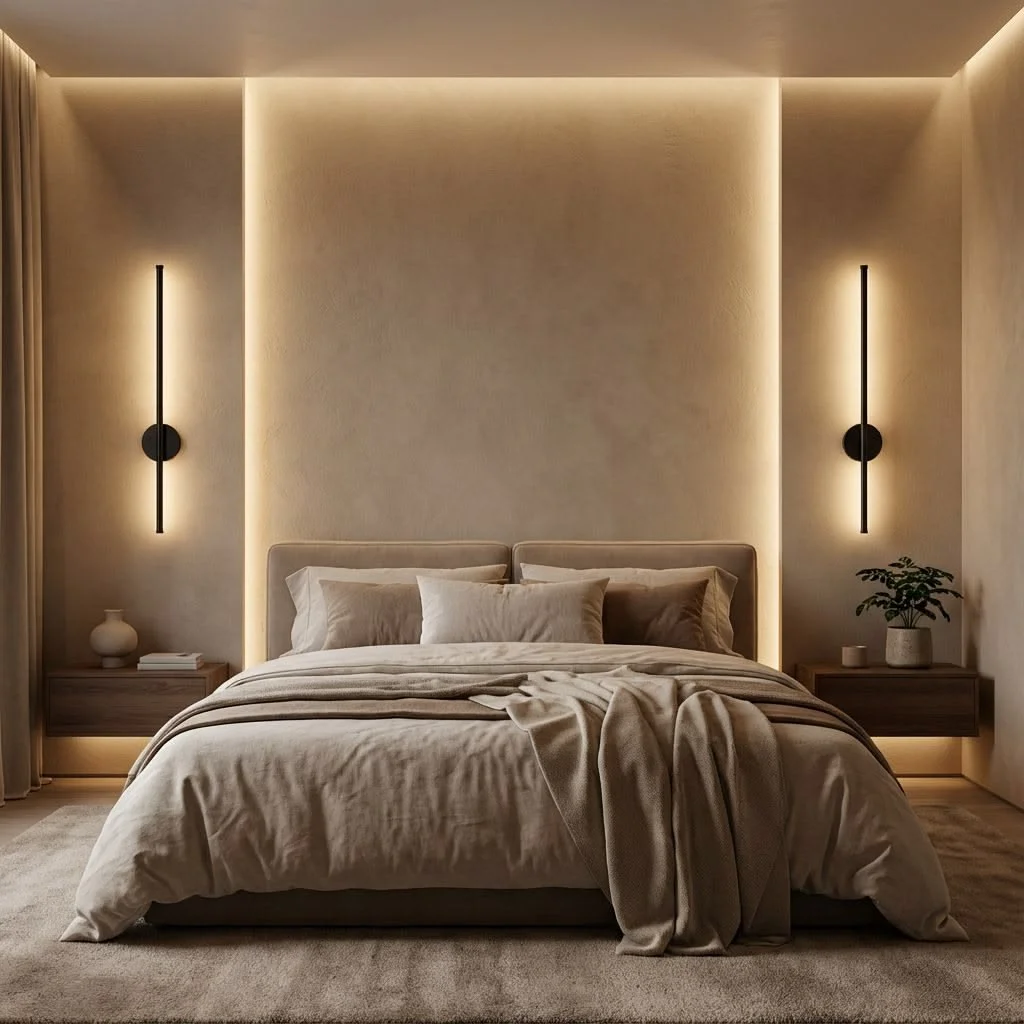
In the bedroom, the bed is usually the natural focal point, especially when it has a beautiful headboard or a designed wall behind it.
You can highlight the bed with a padded headboard, wood panels, soft wallpaper, wall lights, or indirect lighting. Bedding, cushions, and throws can also help make the bed look more elegant and inviting.
Since the bedroom should feel relaxing, the focal point should be stylish but not too busy. Soft colors, warm lighting, and balanced textures work best in this space.
Focal Point in the Dining Room
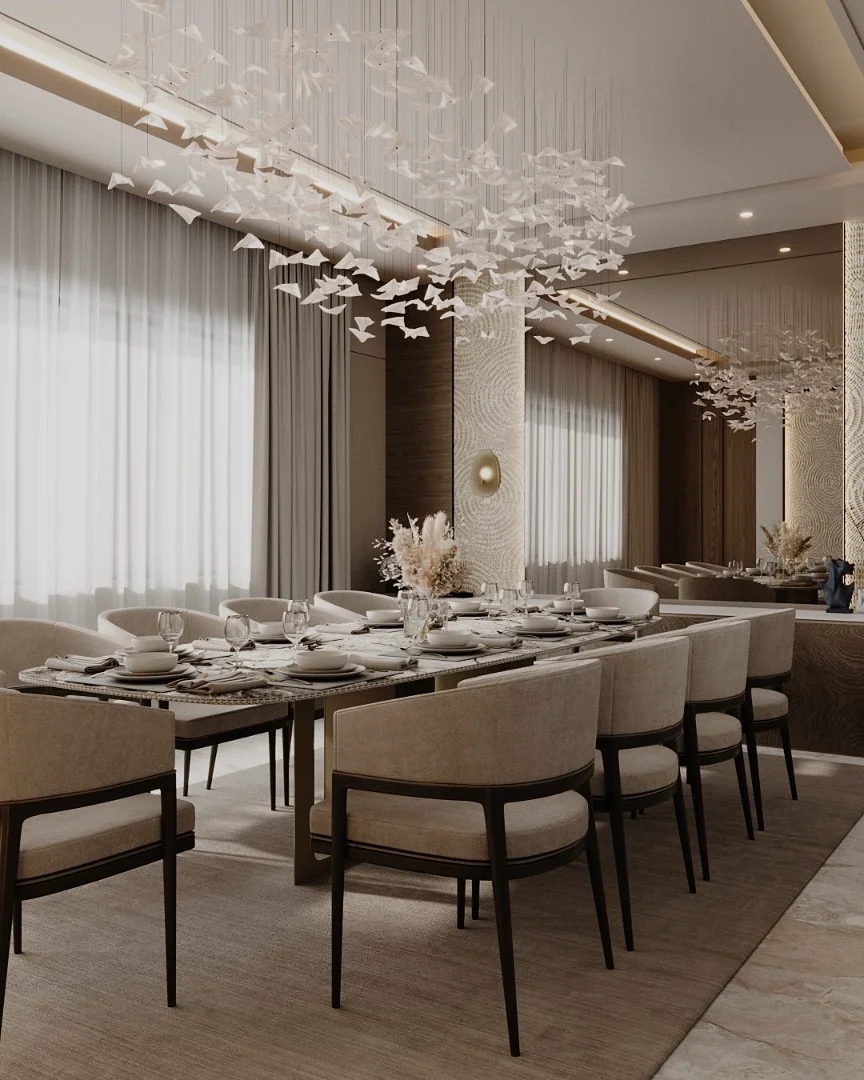
In the dining room, the focal point can be the chandelier, the dining table, a mirror, a console table, or a feature wall behind the dining area.
A chandelier above the dining table is one of the easiest ways to create a strong focal point. It should be proportional to the size of the table and the height of the ceiling. A rug under the dining table can also help define the area and make it feel more complete.
Focal Point in the Entrance
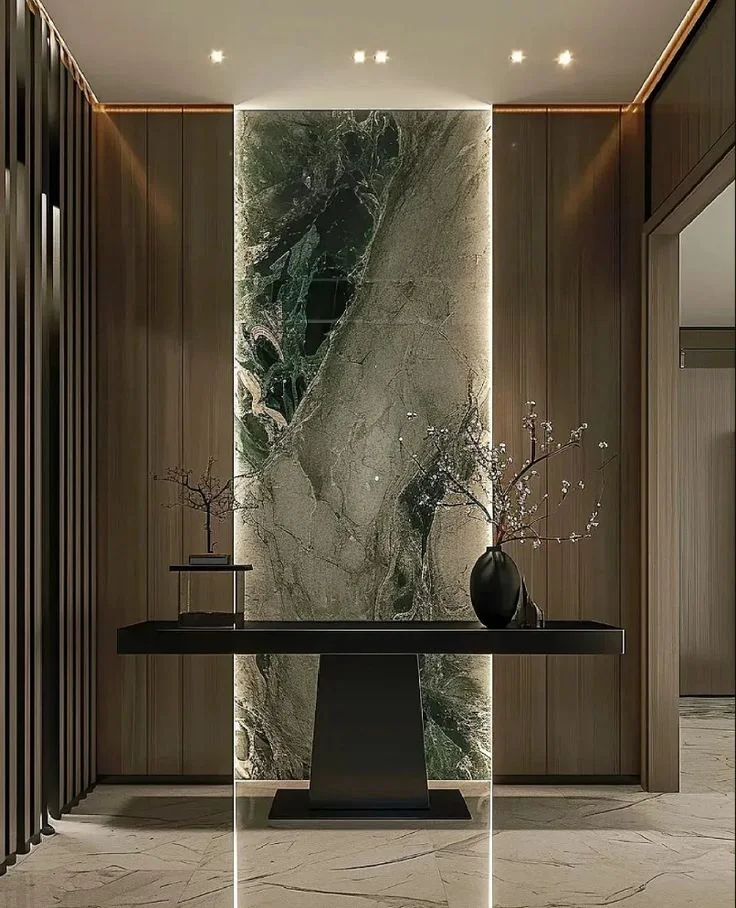
The entrance creates the first impression of the home, so it needs a simple but elegant focal point. This can be a console table, a large mirror, a piece of artwork, wall lighting, or a beautiful indoor plant.
For small entrances, choose one clear statement piece, such as a mirror with a special frame or a simple console with minimal accessories. For larger entrances, you can add a chair, a rug, or decorative lighting to complete the look.
Focal Point in the Kitchen
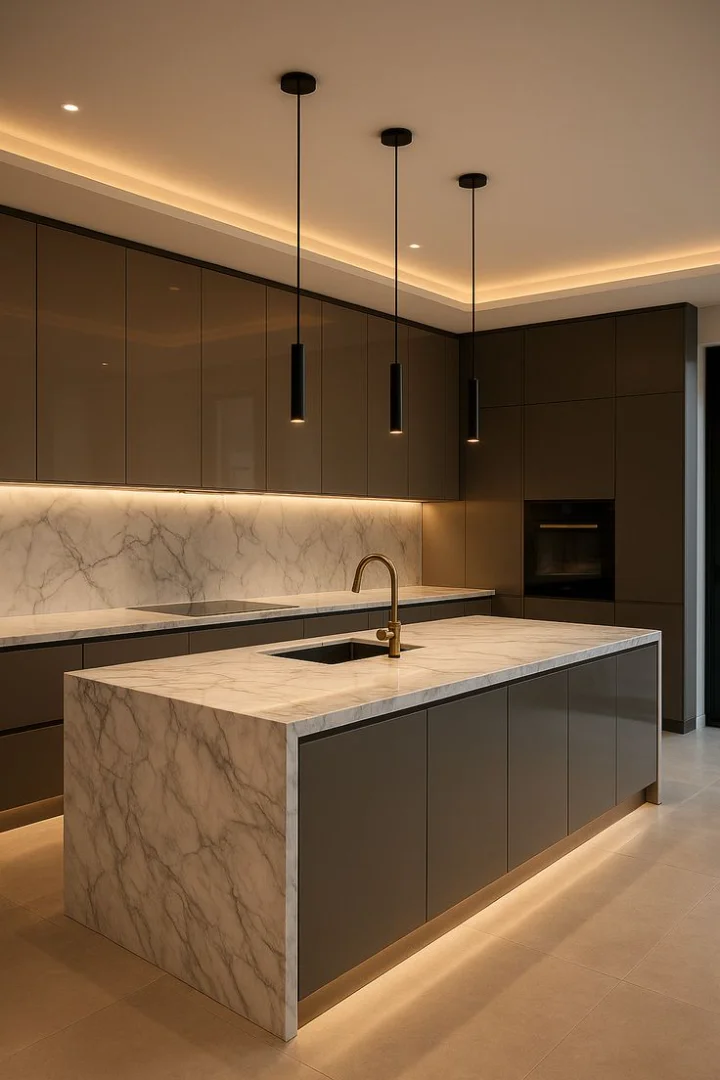
In the kitchen, the focal point can be the island, the backsplash, pendant lighting, or stylish bar stools.
A kitchen island can become the main feature if it has a different color, special material, or elegant countertop. The backsplash can also create visual interest, especially when using patterned tiles, marble-look surfaces, or textured materials.
The focal point in the kitchen should always be practical as well as beautiful, because the kitchen is a space used every day.
Focal Point in the Bathroom
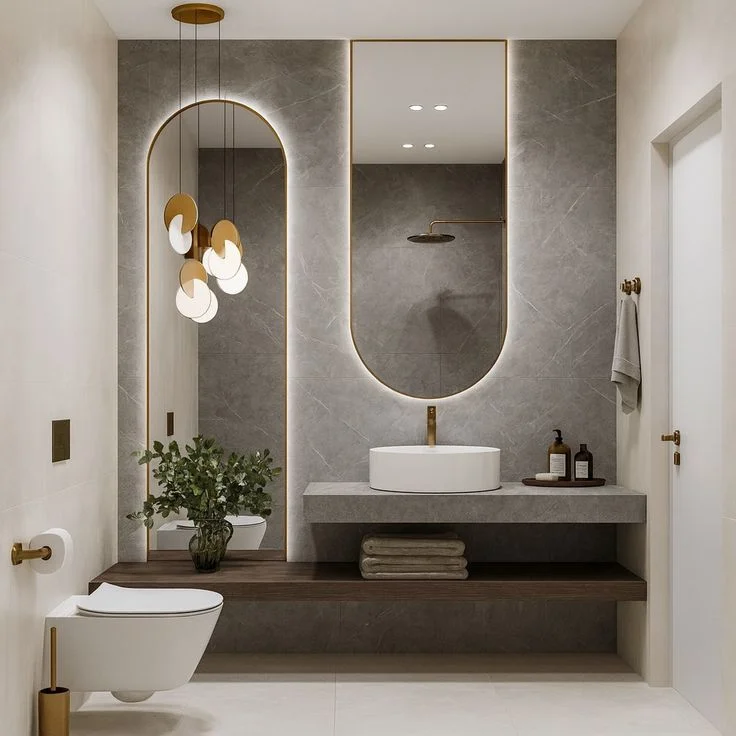
Even a bathroom can have a beautiful focal point. It can be the mirror, vanity unit, shower wall, lighting, or a special wall finish.
Using marble-look porcelain or a textured tile on one wall can add elegance without overwhelming the space. A backlit mirror or a unique sink design can also make a small bathroom feel more luxurious.
Tips for Choosing a Focal Point
The focal point should match the size of the room. A very large piece can overwhelm a small space, while a very small piece may disappear in a large room.
Choose colors and materials that work with the overall interior style. The focal point does not have to be completely different from everything else; it just needs to have a stronger visual presence.
Lighting is very important. A spotlight on artwork, hidden lighting behind a headboard, or pendant lights above a dining table can make the focal point look more elegant and intentional.
Avoid having more than one strong focal point in the same room. If the wall is bold, keep the furniture simple. If the chandelier is dramatic, choose calmer accessories.
Common Mistakes to Avoid
One common mistake is choosing a beautiful piece that does not suit the room. For example, a very large chandelier in a small room, a tiny artwork on a wide wall, or too many bold colors in one space.
Another mistake is choosing a focal point without coordinating the rest of the room around it. A focal point needs support from furniture placement, lighting, rugs, colors, and accessories to look complete.
Conclusion
Choosing a focal point in every room helps make the interior design feel more elegant, balanced, and organized. Whether it is a wall, furniture piece, light fixture, mirror, artwork, or decorative detail, the focal point gives the room personality and direction.
When chosen carefully, it becomes easier to arrange the rest of the space, and the final design looks more harmonious and professional.