Hijazi Homes as Inspiration for Modern Interior Design
Amid the historic alleys of the Hijaz region, between the Red Sea breeze and the golden light of the desert, stand Hijazi homes — timeless masterpieces that merge artistry, culture, and environmental intelligence. Today, these homes have become a profound source of inspiration for modern interior designers, offering lessons in warmth, functionality, and identity that continue to shape the aesthetics of the future.
Hijazi Homes as Inspiration for Modern Interior Design
Amid the historic alleys of the Hijaz region, between the Red Sea breeze and the golden light of the desert, stand Hijazi homes — timeless masterpieces that merge artistry, culture, and environmental intelligence.
Today, these homes have become a profound source of inspiration for modern interior designers, offering lessons in warmth, functionality, and identity that continue to shape the aesthetics of the future.
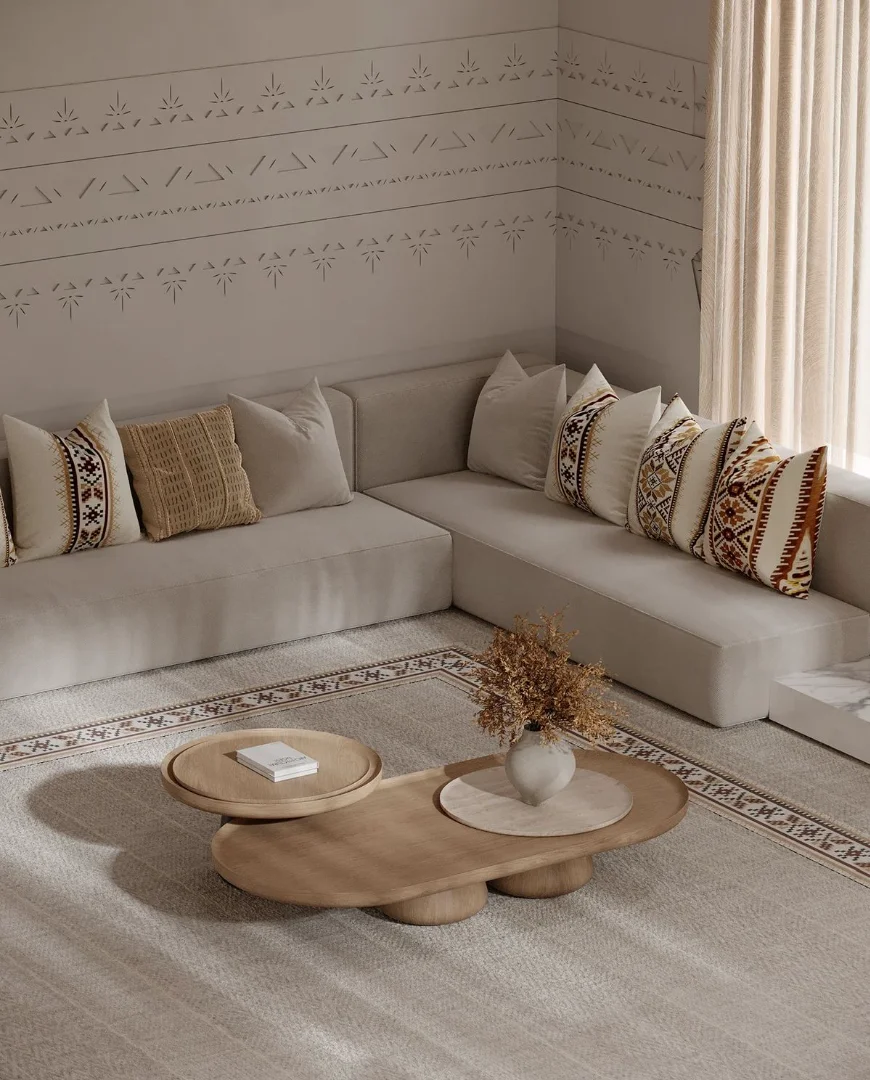
The Soul of Hijazi Interior Design
Balance Between Beauty and Function
Traditional Hijazi homes achieved harmony between aesthetic refinement and practical living.
Room layouts, narrow corridors, and the central courtyard (known as Al-Hosh) were not random; they were intentional responses to the climate, culture, and lifestyle.
This concept — beauty with purpose — remains one of the core principles of modern interior design, where every element must serve both form and function.
Light and Ventilation: Ancient Lessons for Modern Spaces
In Hijazi design, light was a living element.
Wooden lattice windows (mashrabiyas), stained glass, and interior courtyards controlled sunlight and airflow, creating gentle, rhythmic lighting throughout the home.
Modern designers reinterpret these features through:
Carved wooden screens or patterned panels that filter light and add cultural depth.
Warm, indirect lighting to recreate the soft ambiance of traditional Hijazi homes.
Blending natural and artificial light to achieve visual comfort and emotional warmth.
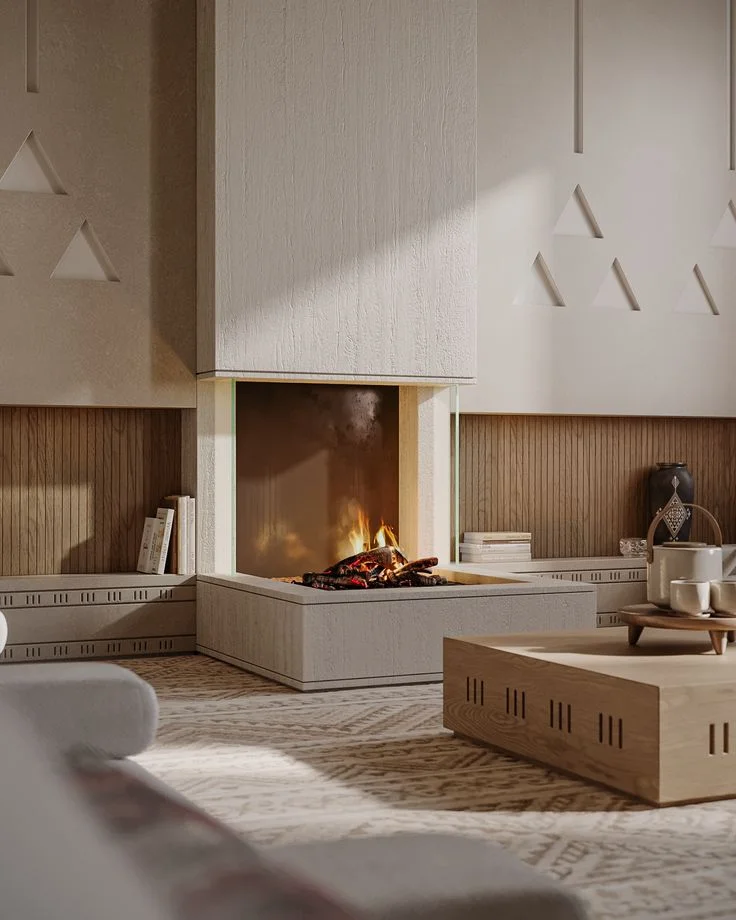
Colors and Materials: The Palette of Hijaz
The Hijazi color palette draws from its natural and coastal environment — calm, warm, and organic.
Modern interiors inspired by Hijazi design often feature:
Base colors: beige, honey, off-white, and warm browns.
Accent tones: deep blue, olive green, and muted gold — echoing the sea, palms, and sunset over the mountains.
In materials, the charm lies in combining natural authenticity with modern sophistication:
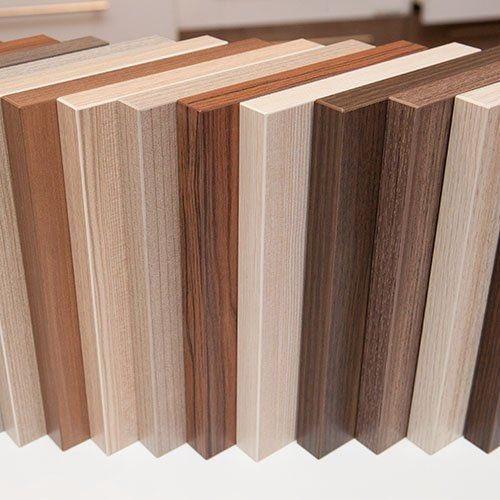
Hand-carved wooden doors and ceilings.
Stone and patterned floor tiles with traditional motifs.
Brass and copper fixtures adding a subtle glow of heritage.
This blend creates spaces that are inviting, elegant, and unmistakably Saudi.
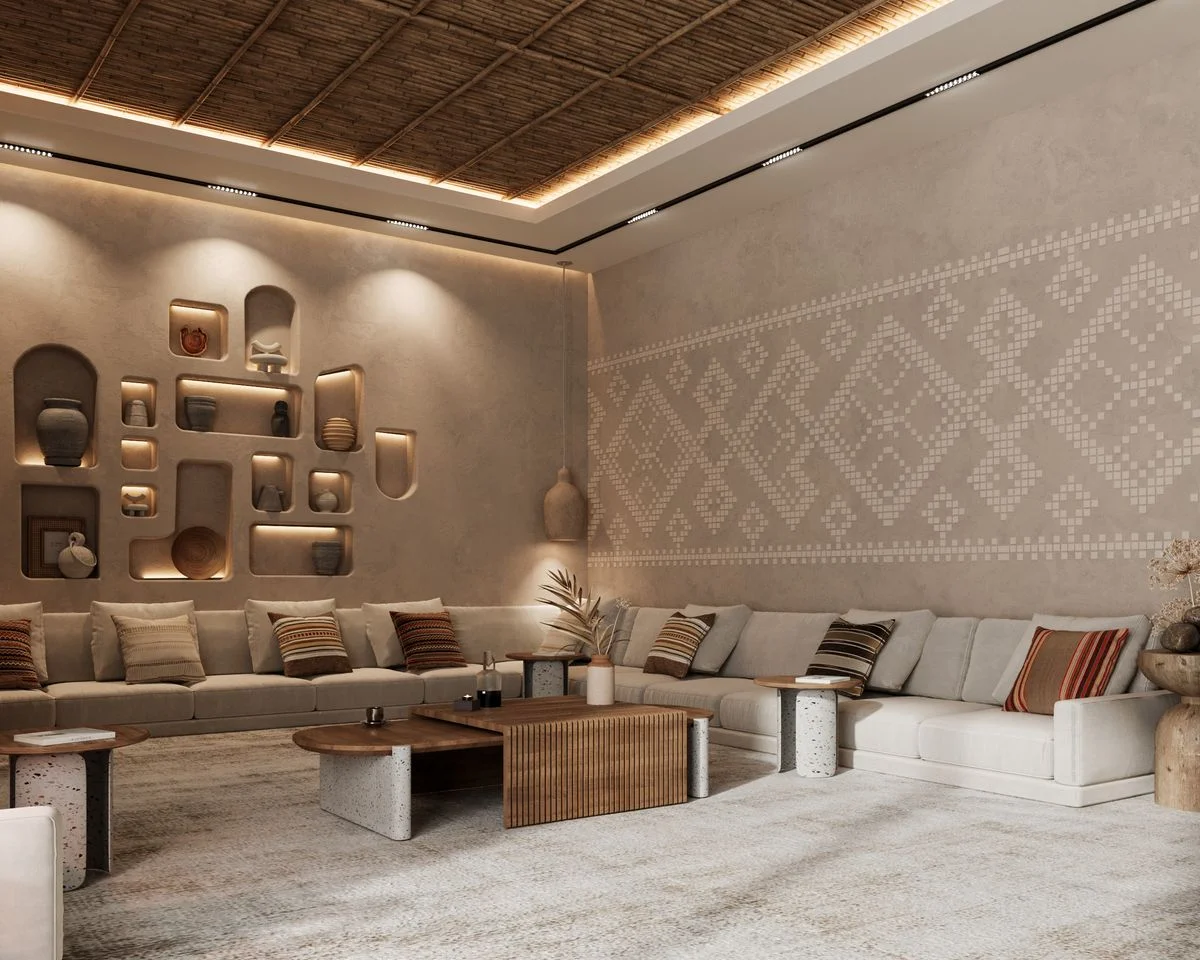
The Central Courtyard: Heart of the Home
The Hosh, or central courtyard, was the soul of the Hijazi house — a sanctuary for light, air, and family gatherings.
It embodied tranquility and privacy, offering a seamless connection between architecture and nature.
In contemporary design, this concept lives on through:
Indoor gardens or water features that echo the serenity of the traditional courtyard.
Glass walls and open layouts that bring natural light into the core of the home.
Biophilic design — integrating greenery, stone, and natural textures to create a sense of peace and belonging.
Craftsmanship and Detail: The Art of Hijazi Decor
Hijazi interiors are defined by their intricate craftsmanship and symbolic details:
Geometric or floral carvings on wooden doors.
Exposed beam ceilings and arched alcoves.
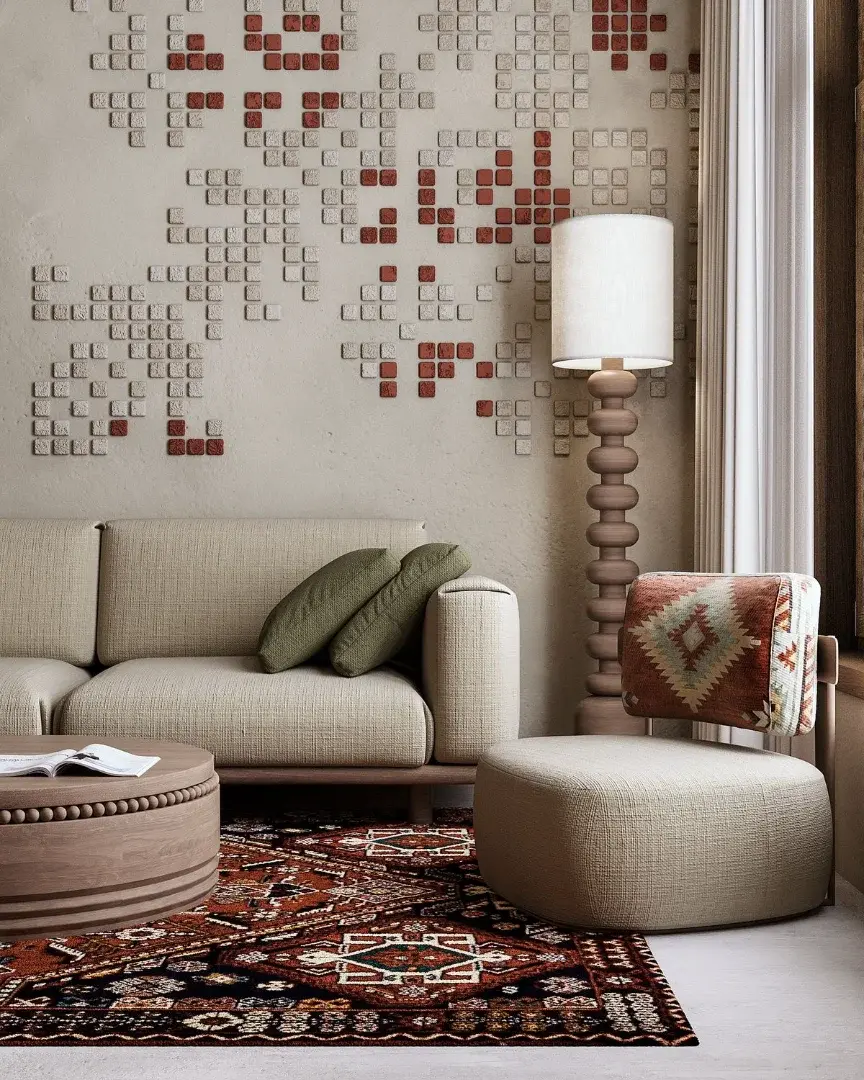
Softly patterned textiles and cushions that evoke warmth and generosity.
Modern designers are reinterpreting these details into simplified, minimalist expressions, maintaining the essence of Hijazi artistry while adapting it to global design sensibilities.
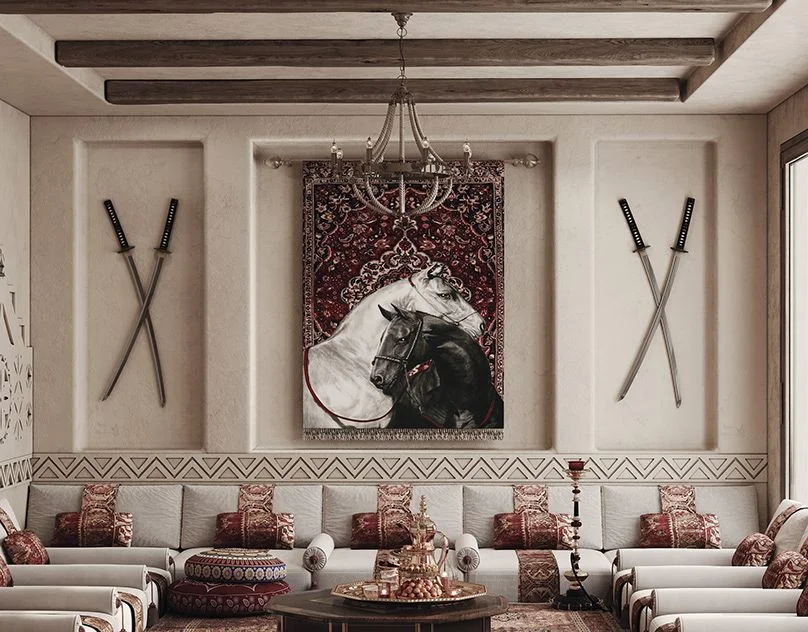
Identity and Sustainability in Design
Hijazi homes were sustainable long before the term existed.
Their design respected climate, orientation, and material availability — a philosophy that modern architecture strives to revive.
In today’s interiors, this translates into eco-conscious materials, natural ventilation, and culturally grounded aesthetics, proving that sustainability and identity can coexist beautifully.
Conclusion: Where Heritage Meets the Future
Hijazi homes remind us that interior design is not just decoration — it’s a story of identity, comfort, and connection.
From carved wood to filtered light and tranquil courtyards, their influence continues to shape a new generation of Saudi designers who blend authenticity with innovation.
The future of design in Saudi Arabia does not abandon its past; it evolves from it —
and in every refined, modern Saudi interior, the spirit of the Hijaz still breathes quietly through its walls.